
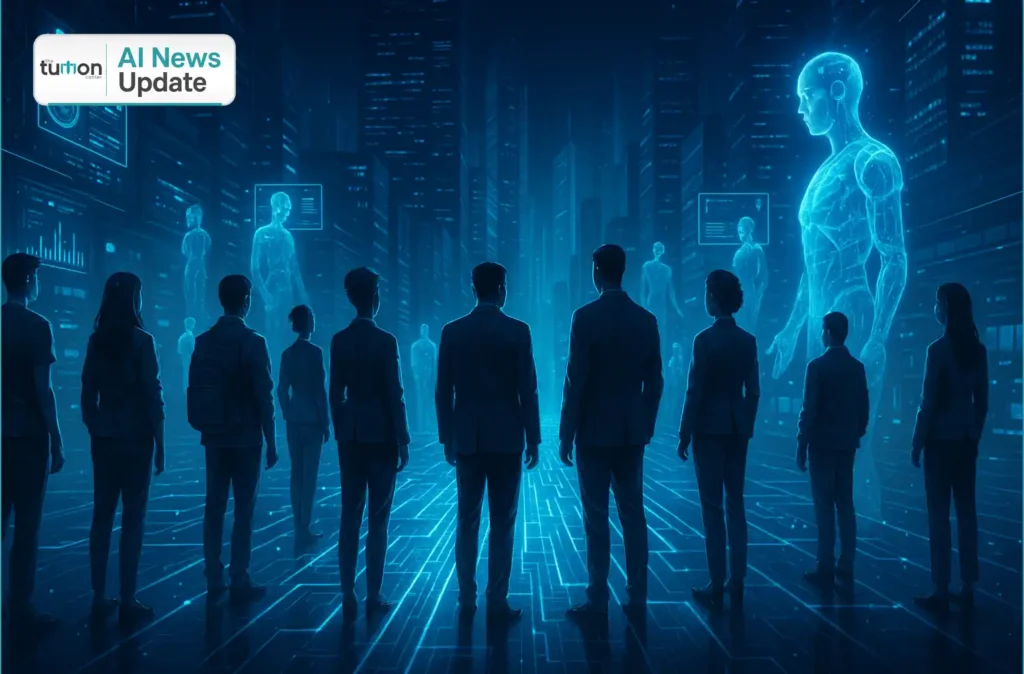
As Nokia’s CEO calls the AI boom a “super cycle” and experts urge investment in long-term human skills, the next decade won’t be about AI vs humans—but about humans who know how to work with AI.
When Pekka Lundmark, CEO of Nokia, described AI as a super cycle, he wasn’t exaggerating. A super cycle is when a transformative technology reshapes the global economy — like electricity, the internet, or smartphones once did. AI is the next one. But unlike past waves, this one transforms not only how we work but who we are as professionals. It challenges us to redefine learning, leadership, and value. This story explores what the AI super cycle means, how businesses and governments are adapting, and — most importantly — how students and professionals can ride the wave instead of being swept away.
The New AI Super Cycle
- Nokia’s Long-Term View: In an October 2025 interview, Lundmark stated, “This is not a short hype cycle—it’s a super cycle.” He explained that AI will drive a decade-long transformation across connectivity, robotics, and mixed reality — reshaping supply chains, talent, and innovation.
- Investment Momentum: Global private investment in AI reached US $93 billion in 2024, up 18% from 2023 (Stanford AI Index 2025). Governments from India to the EU have launched AI acceleration funds to sustain this momentum.
- Hybrid Workforce Demand: Studies from MIT and arXiv highlight that AI complements, not replaces, human expertise. Employees with hybrid skills — digital literacy, teamwork, and judgment — are the most valued in modern organizations.
- Talent Reskilling Imperative: The World Economic Forum projects 60% of workers will require AI-related upskilling by 2027. In India alone, the sector could generate 1.8 million jobs in prompt engineering, AI ethics, and data operations.
- Corporate Transformation: Firms like Microsoft, TCS, and Siemens are embedding AI into every process — making it a layer across departments, not a separate division.
How This Cycle Changes Industries and People
📱 Industry Evolution
AI is evolving from a tool to invisible infrastructure. In telecoms, Nokia deploys self-optimising networks cutting energy use by 30%. In finance, AI enhances fraud detection and personalises credit scoring. Healthcare AI matches specialist-level diagnostic accuracy, while in education, adaptive learning platforms personalise teaching at scale. In the creative economy, generative AI unlocks new careers — from voice designers to AI film directors.
👩🎓 For Students and Young Professionals
The AI super cycle means operating in “permanent beta mode.” To thrive, young people must continually learn, unlearn, and relearn. Focus on critical thinking, ethical reasoning, and cross-disciplinary skills that bridge technology with human understanding. Curiosity, adaptability, and moral clarity will define employability more than degrees.
🧭 For Organizations and Leaders
Leaders must design “human-in-the-loop” systems — where algorithms assist, not override, human decisions. Trust, transparency, and inclusion will define successful AI adoption. Those who integrate ethics early will attract both customers and top talent.
🌍 For Society and Governments
Governments face twin mandates: accelerating innovation and protecting citizens. National AI policies must focus on education, workforce retraining, and digital ethics frameworks. Public-private collaborations are key to ensuring AI benefits are evenly distributed.
Expert Voices
“AI won’t replace people. But people who use AI will replace people who don’t.” — Gary Vaynerchuk, Entrepreneur & Author
“Technology alone isn’t the answer; human creativity is still the scarce resource.” — Dr Andrew Ng, Stanford AI Lab
“The AI super cycle will last a decade. Those who invest in infrastructure and education now will lead the next century.” — Pekka Lundmark, CEO, Nokia
Global Trends Shaping the Cycle
- Sustainability: AI-powered factories optimise resources and reduce emissions, reinforcing global Net Zero goals.
- Defense & Security: Ethical AI governance and accountability are now central to UN dialogues on autonomous systems.
- Education: UNESCO predicts AI-assisted curricula will bridge learning gaps for 200 million students by 2030.
- Healthcare: WHO-endorsed AI triage systems reduce diagnosis time by 60% in underserved areas.
- Global Economy: AI-led productivity could add US $7 trillion to global GDP by 2030 (PwC Report 2025).
Closing Thoughts
The AI super cycle is here — and it’s redefining the world’s workforce, economy, and imagination. The winners won’t be machines or humans alone, but those who master collaboration between the two. To thrive: learn AI fluency, question its logic, and build ethically. Collaborate rather than compete. Because this decade isn’t about losing to AI — it’s about leading with it. The super cycle isn’t about machines replacing humanity; it’s about technology amplifying what makes us human.