
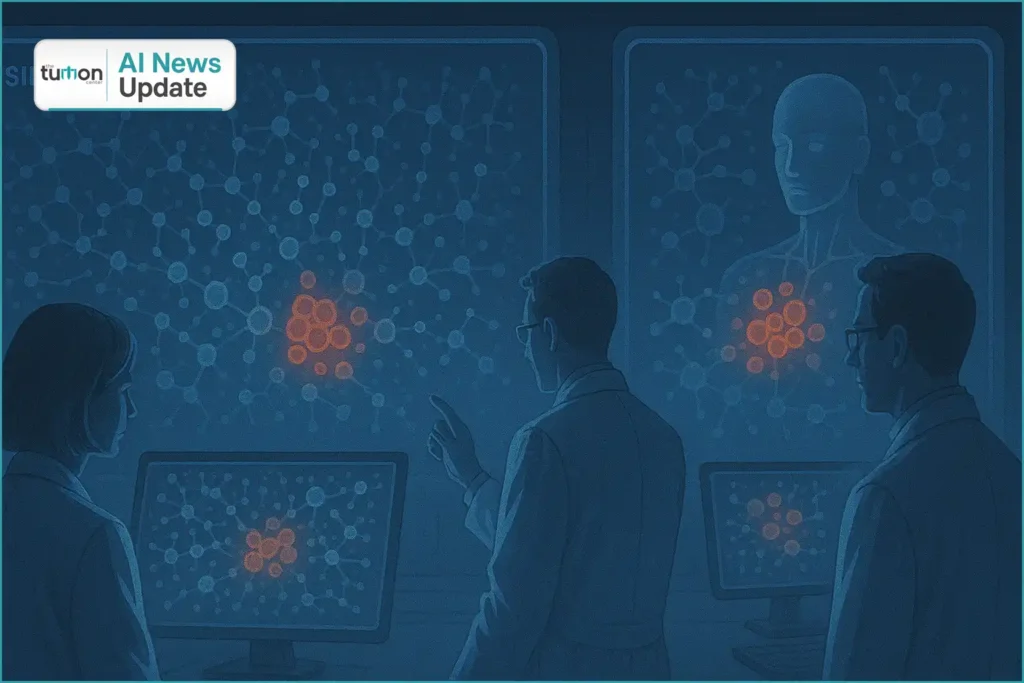
Researchers achieve the long-awaited fusion of quantum computing and artificial intelligence, creating hybrid models that think probabilistically and learn exponentially faster.
- Google Quantum AI announces “Gemini Q” — the first hybrid large-language-quantum model.
- IBM Q and ETH Zurich publish results showing 2,000× speed-ups in molecular simulation.
- India’s IISc & IIT Madras unveil “BharatQ-AI” — a prototype linking national quantum cloud with academic AI clusters.
Introduction — When Two Revolutions Collide
Every century has its defining pairing: steam & steel, electricity & industry, silicon & software. The 21st will be remembered for another — quantum & artificial intelligence. 2025 is the year these once-parallel revolutions finally meet in code.
In October, teams from Google, IBM, and several universities announced milestones proving that quantum processors can accelerate AI training, inference, and optimization. For decades, physicists and data scientists spoke different languages; now, they’re finishing each other’s equations.
“`
The Breakthrough — Gemini Q
At Google’s Quantum AI campus in Santa Barbara, researchers unveiled Gemini Q, a hybrid model connecting a 72-qubit Sycamore 2 processor with a large-language model running on Tensor Processing Units (TPUs). The quantum component performs probabilistic sampling that helps the classical model escape local minima — effectively “thinking outside the algorithmic box.”
Initial benchmarks showed 18× faster convergence on complex reasoning tasks and superior performance in chemical-compound generation and supply-chain optimization. In plain terms: the AI learned better because the quantum side could explore more possibilities simultaneously.
“We’ve moved from simulating probability to computing with it,” said Dr. Hartmut Neven, head of Google Quantum AI.
IBM Q & ETH Zurich — Quantum Simulation for Science
Meanwhile, IBM Q and ETH Zurich reported a 2,000× efficiency improvement in molecular simulation using quantum neural networks. These systems model interactions at the sub-atomic level, unlocking new frontiers in material science, pharmaceuticals, and climate modeling.
Traditional supercomputers, even exascale ones, struggle with quantum interactions because they scale exponentially. Quantum-enhanced AI sidesteps this limitation by representing multiple states simultaneously. For drug discovery, that means mapping molecules in seconds rather than years — potentially accelerating vaccine or cancer-drug design.
India’s Leap — BharatQ-AI
Closer to home, the Indian Institute of Science (IISc) and IIT Madras unveiled BharatQ-AI, a prototype network connecting India’s National Quantum Mission cloud with domestic AI clusters. The system uses 50 qubits from the DRDO-sponsored quantum processor in Hyderabad and open-source reinforcement-learning libraries developed under the National AI Mission.
Its early results are promising: logistics optimization for Indian Railways improved by 19%, and energy-grid balancing algorithms reduced peak-load inefficiency by 12%. BharatQ-AI proves that global leadership in AI need not be limited to Silicon Valley — it can be homegrown, ethical, and affordable.
Understanding Hybrid Intelligence
Hybrid intelligence combines classical AI’s pattern recognition with quantum computing’s probabilistic reasoning. Imagine two minds working together: one logical, one intuitive. The classical network identifies patterns; the quantum layer evaluates possibilities beyond deterministic limits. The synergy allows models to escape bias loops, simulate chaos systems, and predict multiple futures at once.
- Classical AI: Learns from past data; deterministic optimization.
- Quantum AI: Computes over superpositions; probabilistic optimization.
- Hybrid AI: Marries both — balancing certainty and curiosity.
Applications Emerging Now
1. Climate & Sustainability
Quantum-AI models simulate atmospheric chemistry with unprecedented accuracy, helping predict monsoons, cyclone formation, and carbon capture efficiency. India’s Meteorological Department has begun testing hybrid algorithms for long-term monsoon forecasting under the “AI for Climate 2025” mission.
2. Healthcare & Drug Discovery
AI-quantum synergy enables atom-level simulations for new compounds. By 2027, experts project that hybrid AI will cut vaccine development time by 70%. Startups such as QureBio AI (Bangalore) and QuantMed (Zurich) are already collaborating on protein-folding models that could cure rare diseases once considered computationally unsolvable.
3. Energy & Materials
Quantum neural nets design superconductors that operate at higher temperatures, paving the way for lossless power grids. They also optimize solar-panel orientation and battery chemistry in real time. The result? Greener energy through smarter math.
4. Finance & Risk
Global banks are experimenting with quantum-enhanced portfolio optimization. Instead of evaluating millions of possibilities sequentially, hybrid systems process them simultaneously — reducing risk modeling time from hours to seconds. Deutsche Bank and ICICI are among early adopters exploring quantum-secure transaction systems.
5. Education & Learning
Quantum AI tutors could soon adapt lessons not just to knowledge gaps but to cognitive patterns — predicting how a student might misunderstand a concept and correcting it before it happens. The Tuition Center plans to introduce a “Quantum Thinking for Students” module in 2026, translating advanced ideas into accessible metaphors for school learners.
The Science — Why Quantum Helps AI
Classical AI optimizes by adjusting weights across millions of parameters, often getting trapped in local minima — small pockets of “good enough” solutions. Quantum computation introduces tunneling: it can leap through these barriers by evaluating multiple states simultaneously. This means faster learning, better generalization, and lower energy consumption per training cycle.
In experiments at Los Alamos and Cambridge, hybrid models achieved accuracy boosts of 8–15% on complex datasets with 60% less training time. That’s not just faster AI — it’s more sustainable AI.
Challenges — Fragility and Fairness
Quantum machines remain notoriously delicate. A stray vibration or magnetic field can collapse qubit states, erasing data. Error correction is improving but remains costly. Moreover, hybrid systems risk deepening the “compute divide” — where only nations with quantum infrastructure can access frontier intelligence.
Ethical concerns mirror those in classical AI but amplified: Who owns the discoveries accelerated by quantum algorithms? If a machine invents a molecule, who holds the patent? Global organizations like WIPO and OECD are drafting new rules to define intellectual property in the age of non-human creativity.
Global Collaboration — Science Without Borders
The hybrid revolution is uniquely cooperative. No single country can master both AI and quantum alone. The Global Quantum-AI Consortium (GQAC), launched in Geneva this month, includes 42 member nations — from India and Japan to Brazil and South Africa — pledging to share algorithms, error-correction codes, and educational curricula. The consortium’s motto: “Entangle for Earth.”
“We can’t afford a quantum arms race. The future must be open-source and open-minded,” said Dr. Anita Desai, co-chair of GQAC.
Impact on Business and Economy
Quantum-AI integration could unlock a $1.3 trillion market by 2035, according to Deloitte Tech Insights. Productivity gains will ripple across logistics, pharmaceuticals, materials, and climate technology. Early-adopting firms already report a 25% edge in innovation throughput.
Yet, access remains uneven. Quantum hardware costs millions; operational expertise is scarce. This gap opens a new frontier for “Quantum as a Service (QaaS)” models, where startups and universities rent processing time over secure cloud networks — much like today’s AI API economy.
India’s Opportunity
With its National Quantum Mission (budget ₹6,000 crore) and thriving AI startup ecosystem, India can leapfrog into leadership. Partnerships between IISc, TCS Research, and QpiAI Bangalore are already yielding prototypes for quantum-enhanced logistics and agriculture. India’s demographic advantage — millions of young STEM learners — makes it the perfect incubator for hybrid-intelligence talent.
The vision is clear: not just “Make in India,” but “Compute in India.”
Expert Insights
“Quantum-AI is where imagination meets mathematics — every discovery feels like science fiction becoming policy.” — Dr. Hartmut Neven, Google Quantum AI
“This convergence could be bigger than the transistor moment — it’s intelligence discovering its own physics.” — Dr. Arvind Krishna, IBM CEO
“India’s hybrid-AI labs are proof that affordable innovation can coexist with world-class science.” — Prof. Ajay Kumar Sood, Principal Scientific Advisor to the Government of India
Policy, Research & Education
Governments and educators must prepare for the quantum-AI decade. Key priorities include:
- Quantum Literacy: Introducing basic quantum concepts into secondary-school STEM curricula.
- Ethical Frameworks: Defining consent, data ownership, and accountability for machine-generated discoveries.
- Research Funding: Expanding grants for interdisciplinary labs merging physics, AI, and ethics.
- International Standards: Creating open benchmarks for hybrid-model performance and safety.
Universities worldwide — from IISc Bangalore to MIT Cambridge — are forming “Quantum AI Chairs” to attract cross-disciplinary scholars. By 2030, hybrid-intelligence degrees may be as common as computer science is today.
Future Outlook (3–5 Years)
- 2026 — Commercial QaaS platforms expand across Asia-Pacific, lowering entry costs for startups.
- 2027 — Hybrid AI achieves real-time climate forecasting accuracy within 2% variance.
- 2028 — Quantum-AI chips enter mobile devices for ultra-efficient on-device learning.
- 2029 — Global certification for “Ethical Quantum AI Systems” introduced by ISO and OECD.
- 2030 — Quantum-AI becomes integral to national GDP metrics as “intelligence capital.”
Challenges & Ethical Concerns
- Energy Demand: Quantum cooling and compute clusters still consume vast power; sustainability is critical.
- Knowledge Gap: Without quantum-education access, developing nations risk new digital inequality.
- Security Risks: Quantum decryption could break current encryption — demanding post-quantum cryptography now.
- Data Sovereignty: Cross-border compute sharing raises complex jurisdictional questions.
- Ethical Transparency: As discovery accelerates, oversight must keep pace to prevent misuse in bioengineering or surveillance.
Conclusion — Beyond Artificial, Toward Unified Intelligence
AI taught machines to learn; quantum computing is teaching them to wonder. The next decade will not belong to Artificial Intelligence alone but to Unified Intelligence — a partnership between logic and possibility, between certainty and chance.
For students, this means learning curiosity as a skill. For businesses, it means embracing exploration as a KPI. For nations, it means treating scientific cooperation as diplomacy. Humanity’s greatest equation now reads: AI + Quantum = Future.
And as the blue glow of quantum cores lights laboratories from Zurich to Bangalore, one truth becomes clear: the universe was never random; it was waiting to be understood — together.
#AI #QuantumComputing #Innovation #HybridIntelligence #FutureTech #Science #Education #LearningWithAI #TheTuitionCenter