
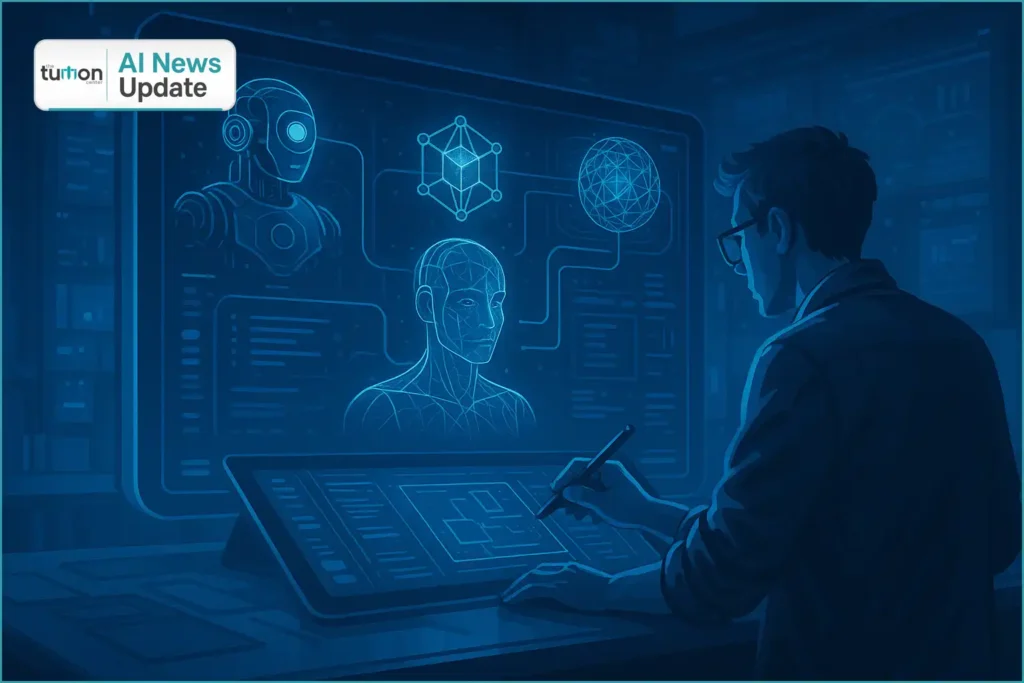
How a design platform’s leap into AI re-imagines creativity, app building and collaboration for students, educators and creators.
- Figma acquires the node-based platform Weavy and rebrands the combined tool as “Figma Weave”.
- The tool enables branching workflows and simultaneous model-use in one canvas—rather than switching between separate AI apps.
- For the learning and maker ecosystem, this means more accessible power, fewer silos and creative workflows that mirror real-world multidisciplinary projects.
Introduction
In the world of creative learning and no-code education, having a tool that empowers students, tutors and makers to jump straight into design and AI workflows is no longer optional—it’s essential. Today we focus on Figma Weave, the latest advancement from Figma (the ubiquitous cloud-based design platform), which now brings not just visual design but multi-model AI workflows into the same space. For educators looking to prepare future creators, and learners who want to build apps, animations or AI-augmented designs, this is a breakthrough moment.
The significance? Historically, learners and professionals alike have worked in silos: one tool for prompting a language model, another for editing, a separate one for video or image generation, and then another for app layout or prototype. With Figma Weave, the workflow blueprint shifts from “tool-hop” to “unified canvas”. That means fewer friction points, less cognitive overhead and more room for creativity.
Key Developments
Here’s how Figma’s move plays out in detail.
Acquisition and launch
Figma acquired the creative workflow platform Weavy, known for enabling users to build branching AI model pipelines inside an editor. The acquisition was announced in late October 2025.The rebranded product, Figma Weave, merges Weavy’s node-based interface with Figma’s design canvas. Users will now be able to plug in multiple AI models (text, image, video) within the same workflow and apply editing, branching, variant-generation and comparison—all inside one tool.
Core features
Some of the standout capabilities include:
- Multi-model orchestration: Designers can route a single prompt through two or more models (for example, one model for image generation, another for style transfer), branch the outputs, compare results and merge them—all inside the canvas.
- Node-based workflow editor: Rather than linear prompt-and-wait style, the tool lets users create structured graphs with decision points, branches, edits and loops—making creative exploration far richer.
- Embedded editing for image & video: The platform now supports layered editing of images and videos generated via AI, so creators don’t need to export, edit in another app and re-import.
- Collaboration & versioning: Since it’s built on Figma’s collaborative cloud backbone, teams of students, educators or creators can work together in real-time—seeing AI branches, comparing variants, and iterating together.
Why this matters now
We are entering a phase where prompt-engineering alone is not enough. The next frontier is *workflow engineering*—deciding which model, which branch, which edit, which combination yields the best result. For educational technology, for creative services and for the burgeoning “AI maker” economy, tools that simplify that orchestration will have outsized impact.
Impact on Industries and Society
Let’s explore how this tool ripples across sectors.
Education & upskilling
For learners: Rather than switching between five tools to build an AI-augmented presentation or prototype, you can now work in one canvas and see the full journey—from prompt to model to variant to edit to final. That means less time lost in tool-transitions, and more time in creative thinking.
For educators: This means designing curricula around workflow thinking, not just tool use. Students can learn how to pick a model, how to branch, how to compare—skills that mirror real-world AI production rather than isolated exercise prompts.
Creative & no-code economy
In the no-code / maker space, Figma Weave lowers the entry barrier significantly. Makers who could previously build basic prototypes now have the tools to integrate AI-powered visuals, branching logic, and video edits inside the same environment. This translates to faster iteration cycles and more creative freedom.
Business innovation
Enterprises focusing on design, marketing, UX, and innovation can adopt this tool to streamline their creative pipelines. Instead of separate teams for prompt-generation, model-scouting, editing and variant-comparison, they can centralise workflows. That means better collaboration, faster turnaround and potentially lower costs.
Expert Insights
“We see AI outputs as a new medium to mold, and we believe the combination of human craft alongside AI generation unlocks more expression and a bolder point of view,” Figma stated in its announcement regarding Weave.
This quote serves as a reminder: The human remains central. The AI isn’t replacing the creator—it’s amplifying the workflow, enabling branching, experimentation and richer creative journeys.
India & Global Angle
Globally, creators and startups across regions are seeking tools that simplify AI workflows and reduce dependencies on high-end infrastructure. Figma Weave fits that bill. In India, where design, marketing, edtech and startup ecosystems are booming, having an accessible canvas that supports AI branching and collaboration is a strategic advantage.
For Indian students and micro-services providers (think: AI-powered creative services), this tool provides an opportunity to jump into global-grade workflows without needing deep coding. It aligns neatly with our vision at TheTuitionCenter.com: to democratise AI creative skills and build real-world project experience.
Policy, Research, and Education
From an education policy perspective, tools like Figma Weave demand curriculum updates. It’s no longer sufficient to teach “how to generate an image with AI”. Rather, students must learn workflow composition across models, branching logic, variant comparison, and collaborative production. Research labs in design, HCI and AI should focus on how such tools affect creativity, iteration speed and accessibility.
Challenges & Ethical Concerns
Despite its promise, several caution flags are worth noting:
- Model-bias and variant replication: Seamlessly switching between models and comparing results may amplify subtle biases or reproducibility issues unless carefully managed.
- Ownership of branching outputs: When a branch uses multiple models, who owns the derivative work? For students and creators, this needs clarity in licensing and attribution.
- Over-reliance on UI abstractions: There is a risk that learners focus only on the “drag-and-drop” workflow and lose understanding of underlying model trade-offs, data ethics and prompt fundamentals.
Future Outlook (3–5 Years)
- Workflows will become more composable: We will see network-style AI canvases where branching, looping and conditional logic are standard for creators.
- Education tools will embed workflow visualisation: Learners will trace “Which model produced which branch, why we chose it, and how we compared outputs” as part of assessment.
- Regional and multilingual variants will integrate seamlessly: For India and other non-English environments, branching models tailored to regional languages and cultures will become part of the creative canvas.
Conclusion
In a world where creative output and AI production are merging, Figma Weave stands out as a milestone. For students, educators and creative professionals, the message is clear: master not just the prompt—but the workflow. Focus on branching, comparison, iteration and collaboration. With the right mindset, tools like this can democratise high-end creative production and open access to a new generation of AI-powered makers.
The significance? Historically, learners and professionals alike have worked in silos: one tool for prompting a language model, another for editing, a separate one for video or image generation, and then another for app layout or prototype. With Figma Weave, the workflow blueprint shifts from “tool-hop” to “unified canvas”. That means fewer friction points, less cognitive overhead and more room for creativity.
Key Developments
Here’s how Figma’s move plays out in detail.
Acquisition and launch
Figma acquired the creative workflow platform Weavy, known for enabling users to build branching AI model pipelines inside an editor. The acquisition was announced in late October 2025. The rebranded product, Figma Weave, merges Weavy’s node-based interface with Figma’s design canvas. Users will now be able to plug in multiple AI models (text, image, video) within the same workflow and apply editing, branching, variant-generation and comparison—all inside one tool.
Core features
Some of the standout capabilities include:
- Multi-model orchestration: Designers can route a single prompt through two or more models (for example, one model for image generation, another for style transfer), branch the outputs, compare results and merge them—all inside the canvas.
- Node-based workflow editor: Rather than linear prompt-and-wait style, the tool lets users create structured graphs with decision points, branches, edits and loops—making creative exploration far richer.
- Embedded editing for image & video: The platform now supports layered editing of images and videos generated via AI, so creators don’t need to export, edit in another app and re-import.
- Collaboration & versioning: Since it’s built on Figma’s collaborative cloud backbone, teams of students, educators or creators can work together in real-time—seeing AI branches, comparing variants, and iterating together.
Why this matters now
We are entering a phase where prompt-engineering alone is not enough. The next frontier is *workflow engineering*—deciding which model, which branch, which edit, which combination yields the best result. For educational technology, for creative services and for the burgeoning “AI maker” economy, tools that simplify that orchestration will have outsized impact.
Impact on Industries and Society
Let’s explore how this tool ripples across sectors.
Education & upskilling
For learners: Rather than switching between five tools to build an AI-augmented presentation or prototype, you can now work in one canvas and see the full journey—from prompt to model to variant to edit to final. That means less time lost in tool-transitions, and more time in creative thinking.
For educators: This means designing curricula around workflow thinking, not just tool use. Students can learn how to pick a model, how to branch, how to compare—skills that mirror real-world AI production rather than isolated exercise prompts.
Creative & no-code economy
In the no-code / maker space, Figma Weave lowers the entry barrier significantly. Makers who could previously build basic prototypes now have the tools to integrate AI-powered visuals, branching logic, and video edits inside the same environment. This translates to faster iteration cycles and more creative freedom.
Business innovation
Enterprises focusing on design, marketing, UX, and innovation can adopt this tool to streamline their creative pipelines. Instead of separate teams for prompt-generation, model-scouting, editing and variant-comparison, they can centralise workflows. That means better collaboration, faster turnaround and potentially lower costs.
Expert Insights
“We see AI outputs as a new medium to mold, and we believe the combination of human craft alongside AI generation unlocks more expression and a bolder point of view,” Figma stated in its announcement regarding Weave.
This quote serves as a reminder: The human remains central. The AI isn’t replacing the creator—it’s amplifying the workflow, enabling branching, experimentation and richer creative journeys.
India & Global Angle
Globally, creators and startups across regions are seeking tools that simplify AI workflows and reduce dependencies on high-end infrastructure. Figma Weave fits that bill. In India, where design, marketing, edtech and startup ecosystems are booming, having an accessible canvas that supports AI branching and collaboration is a strategic advantage.
For Indian students and micro-services providers (think: AI-powered creative services), this tool provides an opportunity to jump into global-grade workflows without needing deep coding. It aligns neatly with our vision at TheTuitionCenter.com: to democratise AI creative skills and build real-world project experience.
Policy, Research, and Education
From an education policy perspective, tools like Figma Weave demand curriculum updates. It’s no longer sufficient to teach “how to generate an image with AI”. Rather, students must learn workflow composition across models, branching logic, variant comparison, and collaborative production. Research labs in design, HCI and AI should focus on how such tools affect creativity, iteration speed and accessibility.
Challenges & Ethical Concerns
Despite its promise, several caution flags are worth noting:
- Model-bias and variant replication: Seamlessly switching between models and comparing results may amplify subtle biases or reproducibility issues unless carefully managed.
- Ownership of branching outputs: When a branch uses multiple models, who owns the derivative work? For students and creators, this needs clarity in licensing and attribution.
- Over-reliance on UI abstractions: There is a risk that learners focus only on the “drag-and-drop” workflow and lose understanding of underlying model trade-offs, data ethics and prompt fundamentals.
Future Outlook (3–5 Years)
- Workflows will become more composable: We will see network-style AI canvases where branching, looping and conditional logic are standard for creators.
- Education tools will embed workflow visualisation: Learners will trace “Which model produced which branch, why we chose it, and how we compared outputs” as part of assessment.
- Regional and multilingual variants will integrate seamlessly: For India and other non-English environments, branching models tailored to regional languages and cultures will become part of the creative canvas.
Conclusion
In a world where creative output and AI production are merging, Figma Weave stands out as a milestone. For students, educators and creative professionals, the message is clear: master not just the prompt—but the workflow. Focus on branching, comparison, iteration and collaboration. With the right mindset, tools like this can democratise high-end creative production and open access to a new generation of AI-powered makers.