
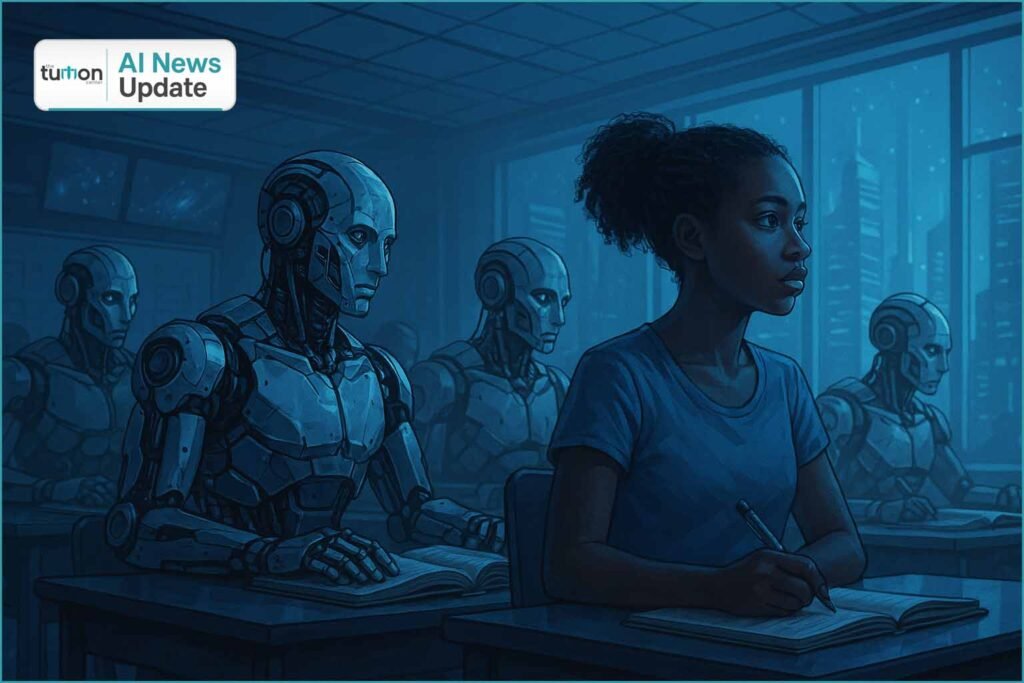
As the world races to build, deploy and capture value from AI, leading innovation hubs are emerging — here’s how the landscape looks and why you should care.
- According to the McKinsey & Company 2025 survey 88% of organisations report using AI in at least one business function.
- Over 139 economies are analysed in the World Intellectual Property Organization (WIPO) 2025 Global Innovation Index.
- India, while improving, still trails in patent per capita yet shows high GenAI workforce adoption at 92%. Introduction
“`
Key Developments
The 2025 edition of the McKinsey Global Survey on AI highlights that 88 % of organisations now report use of AI in at least one business function — up from 78 % the year before. But only about one-third are moving beyond pilots and into scaled deployments. The ask is no longer “Do we use AI?” but “How do we scale AI?”
Meanwhile, the WIPO Global Innovation Index (GII) 2025 tracks 139 economies across metrics such as patents, R&D expenditures, knowledge worker density and tech transfer. That provides a comprehensive view of how innovation ecosystems — not just single organisations — are being ranked globally.
A recent report shows that in 2025, the United States remains top for number of notable AI models (561), while Switzerland leads in patents per 100,000 population (18). India is at 29 notable AI models and 2 patents per 100,000 population, but shows an astonishing 92% of knowledge workers using GenAI. These figures highlight both the opportunity and the gap.
Breaking that down: an ecosystem that can generate patents, spin off startups, attract global talent, and embed AI into real business workflows is the one to watch. For students, this means seeing where the real demand will be — not just generative models, but full stack innovation, cross-discipline skills, domain specialisation.
Impact on Industries and Society
When ecosystems thrive, the effects ripple. In education, for example, strong AI innovation hubs lead to curricula being updated, new research partnerships being formed, and students being exposed to the bleeding edge rather than legacy tools. A vibrant innovation ecosystem also means more startup formation, more job creation, and more investment in adjacent domains like biomedicine, robotics, automation and creative technologies.
On the societal side, consider the implications: a country or region with strong AI innovation will scale automation faster, push productivity gains into public services, and solve complex problems like climate modelling, healthcare diagnostics or smart infrastructure. The flip side is risk: regions left out may fall further behind, deepening the global digital divide. For content creators—the very domain you’re in—this means the opportunity to become a bridge: teach skills that map to the leading ecosystems, help learners understand where the real value lies, and adapt to an evolving job market.
Expert Insights
“High-performing organisations are nearly three times as likely as others to say their companies have fundamentally redesigned individual workflows,” states McKinsey.
This is key: innovation isn’t just about better algorithms, it’s about rethinking how work is done. For educators and students, that means not just learning ML frameworks but understanding business, domain context, change management, and how to embed AI into workflows.
India & Global Angle
India is simultaneously a promising student and a fast-moving participant in the global AI ecosystem. On one hand, India has strong GenAI usage penetration — 92% of knowledge workers engaging GenAI tools. On the other hand, patent and model counts still lag the front-runners, showing a gap in the ‘innovation conversion’ channel— turning ideas into scaled value.
The world view matters. A research cluster in Switzerland focused on high-patent density is different from a startup-ecosystem in India targeting scaled deployment. Both matter but serve different needs. For India’s education sector and content creators, the message is: provide students with bridge skills that connect local context with global standards.
Policy, Research, and Education
The development of ecosystems is being supported by national policies. Governments are realising that having a model or a lab isn’t enough; you need investment, talent retention, startup acceleration, research-industry linkages and regulatory clarity. The WIPO index emphasises this ecosystem dimension.
For educators and students: this means your curriculum should reflect real innovation pipelines — patent reading, tech-transfer case studies, startup creation, cross-discipline projects. For instance, content creation geared around AI is no longer tangential — it is central to how ecosystems communicate, upskill and scale.
Challenges & Ethical Concerns
It’s not all smooth sailing. Scaling ecosystems means deep investments, supply-chain dependencies (e.g., hardware, chips, data centres), regulatory uncertainty, and talent competition. There is also the risk of innovation being concentrated in a few geographies which worsens global inequality.
From an ethics standpoint: ecosystems built rapidly may shortcut governance, privacy protections, bias auditing or worker impact. As restructuring workflows becomes the norm (see McKinsey’s insight above) there is risk of displacement, under-skilled workforce, and uneven access. The innovation gap could turn into a social gap.
Future Outlook (3–5 Years)
- Trend 1: More regional innovation hubs will emerge—e.g., in Southeast Asia, Latin America, and India—driven by localised problems and talent pools.
- Trend 2: The innovation premium will shift from “model size” to “model ecosystem fit”—how AI is embedded into sectors like healthcare, farming, climate, education.
- Trend 3: Education and training will evolve: more micro-credentials, “innovation literacy” courses, and collaboration between campus, labs and startups.
Conclusion
For students, educators and creators, the message is clear: don’t just learn the tools—understand the ecosystem. If you want to ride the wave of AI innovation, position yourself where innovation is being built and scaled, not just talked about. Be the bridge between local talent, global standards and real-world impact. As ecosystems mature, you who teach, you who learn, you who create content — your role becomes more valuable. The innovation ecosystem is your new playground.