
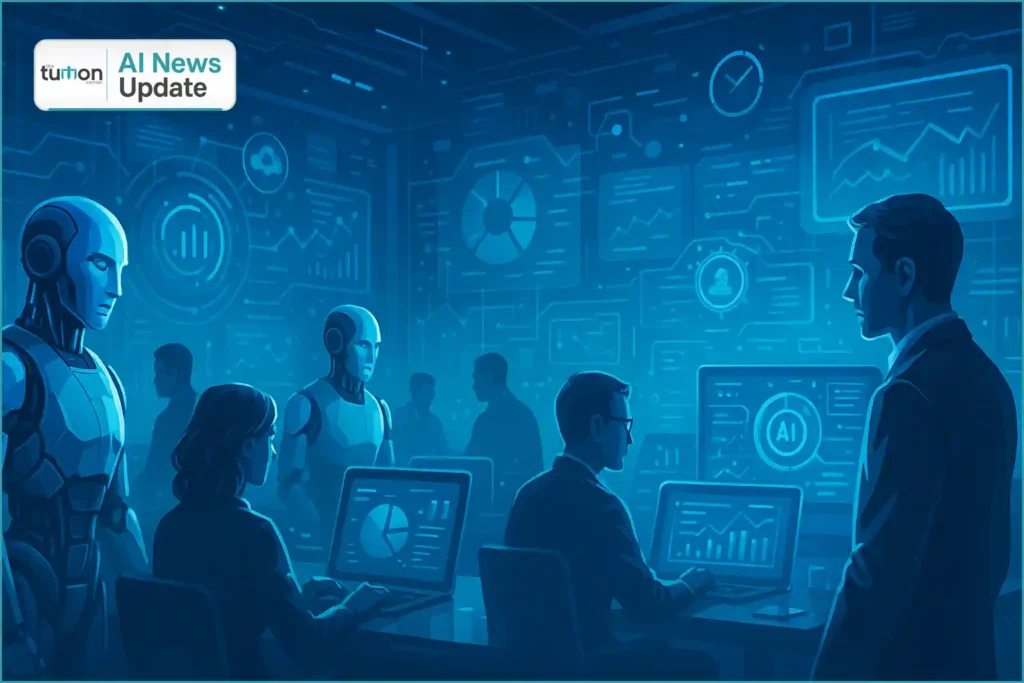
Automation, AI agents, GenAI tools, and digital transformation are reshaping the workforce at a speed traditional education cannot match — creating both massive opportunities and new uncertainties.
- Over 40% of job roles expected in 2030 do not exist today, according to multiple global estimates.
- AI literacy has become a must-have skill, not a competitive advantage.
- Countries that reskill their workforce fastest will dominate global economic growth.
Introduction
In early 2020, discussions about AI and automation revolved around slow adoption timelines. Then the generative AI explosion of 2023–2025 changed everything. Suddenly, AI wasn’t just assisting work — it was doing work. It generated code, analyzed financials, built websites, summarized legal documents, handled customer queries, designed products, and even conducted basic research.
As AI tools evolved into fully autonomous agents capable of multi-step workflows, the employment landscape began shifting at an unprecedented pace. Industries started restructuring job roles, companies redefined hiring requirements, and universities struggled to keep up. The world entered a new era: the AI Skills Revolution.
Key Developments
1. Digital Skills Surpass Formal Degrees
Employers in tech, finance, retail, logistics, health, and media now prioritize AI tool proficiency, problem-solving, adaptability, and practical experience over traditional degrees. Several leading companies have dropped degree requirements entirely.
2. GenAI Skill Demand Skyrockets
Tasks like prompt engineering, workflow automation, AI-assisted design, multimodal analysis, and AI agent orchestration have become mainstream skill requirements across industries.
3. Micro-Credentials Replace Long Programs
Certifications that once took years are now replaced by 4–12 week AI upskilling programs. Tech giants, global universities, and startups offer micro-degrees in GenAI, automation, and data-driven decision-making.
4. AI Agents as Teammates
The rise of autonomous agents has created new workforce categories: AI supervisors, AI flow designers, human-AI coordinators, and digital operations managers. People now work alongside clusters of AI agents that assist in productivity, analytics, and creative tasks.
5. Global Skill Gap Widens
While high-income nations integrate AI deeply across sectors, developing economies face challenges due to infrastructure limitations, lack of training resources, and uneven digital access. Bridging this gap is becoming a top global priority.
Impact on Industries
Technology: AI-first development has cut software development cycles by more than 40%. Engineers now direct AI coding agents rather than writing everything manually.
Finance: AI handles risk modeling, fraud detection, regulatory analysis, and portfolio optimization. Human roles evolve into strategic oversight and client interaction.
Healthcare: Doctors increasingly depend on intelligent diagnostics, medical summarization, and treatment planning support. AI reduces administrative burden, improving patient outcomes.
Media & Entertainment: AI generates scripts, storyboards, music, voiceovers, visual effects, and even rough film edits. Creators focus on ideas, direction, and quality.
Manufacturing & Logistics: Predictive maintenance, automated warehouses, and AI-optimized supply chains are reducing downtime and increasing efficiency.
Education: AI tutors, assessment assistants, and content generators are reshaping how students learn and how teachers teach.
Expert Insights
“AI will not replace workers. Workers who understand AI will replace those who don’t.”
“Adaptability is the new intelligence. The most valuable skill is the ability to learn new skills quickly.”
“GenAI is not a threat — it is a multiplier. The global economy will expand massively if nations embrace reskilling at scale.”
India & Global Angle
India is in a unique position. With the world’s largest youth population and rapidly growing startup ecosystem, the country can lead the global AI workforce. Initiatives like the IndiaAI Mission, PM DISHA digital literacy program, and AI skilling partnerships with top institutions are accelerating readiness.
Globally, nations are adopting different strategies. The U.S. is driving innovation through private sector R&D. China is focusing on national AI infrastructure. Europe is prioritizing safe and ethical AI integration. The UAE and Singapore are building hyper-skilled digital economies with aggressive adoption of AI in government and industry.
Policy, Research, and Education
Policymakers are now focused on merging education with industry needs. Traditional 3-year and 4-year programs are being redesigned to integrate GenAI throughout the curriculum.
- AI literacy introduced from primary school
- Curricula updated every 6–12 months instead of every decade
- National skilling platforms offering free AI courses
- Industry-academia partnerships for hands-on training
- AI labs established in schools, colleges, and community centers
Challenges & Ethical Concerns
Rapid transformation creates real risks:
- Unequal access to AI training tools
- Job displacement for workers in repetitive roles
- Misuse of AI-generated content
- Bias in automated hiring pipelines
- Mental fatigue due to rapid skill changes
Future Outlook (2025–2030)
- AI supervisors will become one of the most in-demand job roles globally.
- Every employee will have a personalized AI mentor for continuous learning.
- Gig workers will use AI tools to run micro-businesses at scale.
- Cross-border remote work will explode due to AI-enabled productivity.
- People who upskill early will enjoy significantly higher earning potential.
Conclusion
The AI Skills Revolution is not a threat — it is a turning point. The world is shifting from degree-based hiring to skill-based hiring. Those who embrace AI tools will become the leaders, innovators, creators, and entrepreneurs of the next decade. For students and professionals, the message is simple: learn AI, work with AI, shape the future with AI.
#AI #AIInnovation #FutureTech #DigitalTransformation #AIForGood #FutureOfWork #Skills #Upskilling #LearningWithAI #TheTuitionCenter