
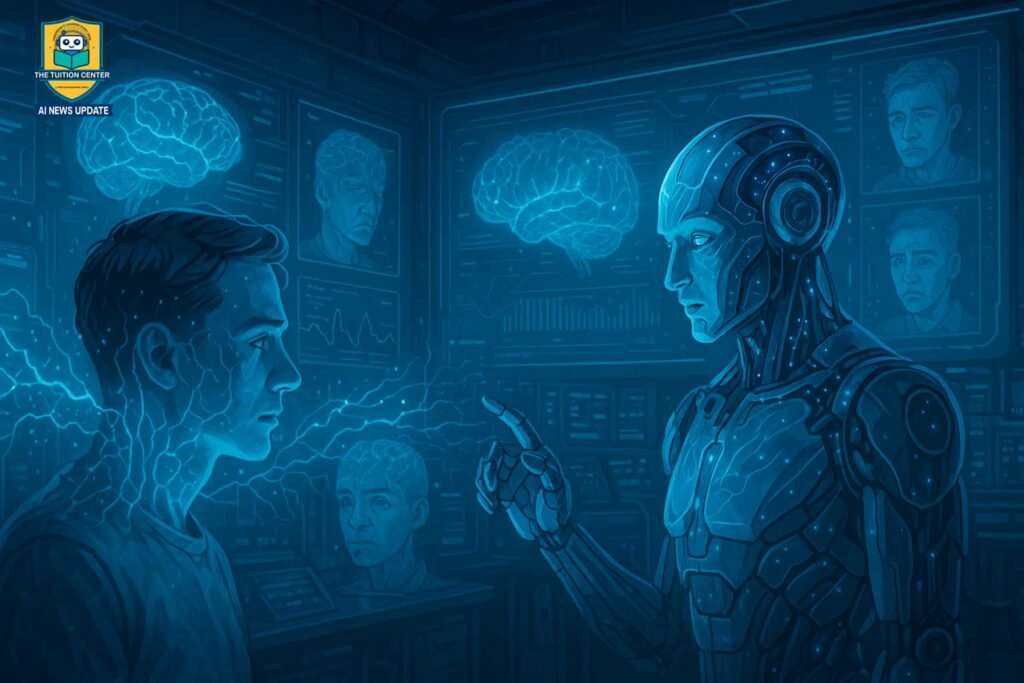
AI-Designed Organic Lifeforms: The New Frontier of Computational Biology
Artificial intelligence is no longer just analyzing life — it is now designing it. From synthetic enzymes to programmable cells, AI-driven biology is rewriting the definition of life on Earth.
- AI systems now design protein structures, synthetic cells, and novel biological organisms.
- India, the US, Singapore, and Switzerland lead global computational-biology labs.
- AI-generated lifeforms are being tested for medicine, sustainability, agriculture, and space exploration.
Introduction
For most of human history, biology was a purely observational science. Humans discovered life, studied life, and tried to understand its rules. But 2023–2025 marked a radical shift — biology moved from observation to creation. Today, artificial intelligence can design organic lifeforms from scratch, generate novel proteins with specific functions, engineer synthetic cells that don’t exist in nature, and simulate evolution at speeds impossible for natural processes.
Welcome to the era of **AI-designed biology** — where computational models act as architects of new organisms.
We are not talking about genetically modified crops or edited animals. Those were early chapters. This new chapter is stranger, deeper, and more transformative. AI doesn’t just edit DNA — it invents DNA. It creates new biological blueprints. It builds enzymes never seen before. It proposes new metabolic pathways. It designs cells with custom behaviors.
This is the frontier where algorithms meet evolution, and data meets DNA. A frontier that will impact medicine, climate, agriculture, energy, marine ecosystems, and even extraterrestrial survival.
This report explores how AI is designing life, where the breakthroughs are happening, the ethics surrounding programmable organisms, and what this means for India and the global biotech landscape.
Key Developments
Over the last 24 months, several breakthroughs reshaped the future of synthetic life. These developments reflect the extraordinary direction in which computational biology is moving.
1. AI-Generated Proteins with Zero Human Input
Researchers at DeepMind (UK), NTU Singapore, and India’s IISc Bengaluru created the first proteins fully generated by AI — without any biological template. These proteins perform complex tasks, including neutralizing toxins, stabilizing vaccines, and breaking down plastic waste.
2. Xenobots 3.0 — AI-Designed Living Robots
The first AI-designed lifeforms, called Xenobots, shocked the world in 2020. But the 2024–2025 versions are exponentially more advanced. AI now designs these living robots — made from frog stem cells — with specific goals: collecting microplastics, healing tissue, and transporting medicine inside the human body.
3. AI-Simulated Evolution Engines
AI evolutionary simulators can now run thousands of evolutionary cycles per second, “breeding” virtual organisms optimized for desired traits — resilience to chemicals, high photosynthesis efficiency, or extreme temperature survival. Then, wet labs convert the digital organism into a physical one.
4. Programmable Cells with Built-In Logic
AI-designed genetic circuits allow cells to perform logic operations (“if temperature > X, produce enzyme Y”). These programmable cells act like biological computers — sensing, responding, and adapting to their environment with precision.
5. India’s Breakthrough in AI-Driven Enzyme Engineering
IISc, IIT Bombay, and several BioNEST incubators are designing enzymes tailored for industrial cleaning, waste management, agriculture, and pharmaceutical processing — all using generative AI models.
Impact on Industries and Society
AI-designed lifeforms will transform multiple global sectors. The implications go far beyond labs — extending into oceans, farms, hospitals, space stations, and cities.
Healthcare: Disease-Fighting Organisms
AI-created microbial agents can seek and destroy cancer cells, repair damaged tissue, and deliver targeted medicine. Custom-designed enzymes can break down disease-causing proteins, neutralize viruses, or reverse inflammatory conditions. Hospitals may soon deploy “bio-cleaners” — AI-designed organisms that sterilize surfaces at a microbial level.
Climate & Sustainability: Life as a Cleanup Tool
AI-designed organisms offer realistic solutions for environmental crises:
- Bacteria engineered to eat ocean plastic.
- Microbes designed to absorb methane and CO₂ from the atmosphere.
- Synthetic algae capable of extreme photosynthesis to restore dying reefs.
- Bio-engineered worms that decompose toxic waste.
This is not theoretical. Multiple biotech startups from India, Netherlands, and Singapore are deploying pilot versions in controlled ecosystems.
Agriculture: Bio-Engineered Soil & Crops
AI-designed organisms can:
- Rebuild dead soil through microbial regeneration.
- Increase nitrogen fixation efficiency by 200%.
- Create pest-resistant crops without chemical pesticides.
- Produce “self-fertilizing” bio-engineered plants.
For India’s agriculture-dependent economy, this represents a massive leap toward sustainable, low-cost farming.
Space Exploration: Life That Survives on Mars
AI-designed extremophiles — synthetic organisms built to withstand radiation, low pressure, and extreme cold — are central to future Mars and Moon missions. These organisms may produce oxygen, clean water, regenerate soil, and support long-term human habitation.
NASA, ISRO, and ESA are actively experimenting with AI-generated microbes for extraterrestrial survival labs.
Expert Insights
“For the first time in human history, we’re not just modifying life — we’re designing it.
Artificial intelligence is accelerating evolution itself.”
— Lead Researcher, Computational Biology Lab, Zurich
“AI-designed organisms will transform medicine and sustainability, but they require rigorous ethical oversight.
Programmable life must be treated with the same seriousness as nuclear technology.”
— Senior Bioethics Advisor, University of Toronto
“India is emerging as a major hub for AI-driven enzyme and microbial engineering.
Our computational models can now create enzymes in weeks instead of decades.”
— Scientist, IISc Bengaluru
India & Global Angle
India’s biotechnology sector has entered a high-growth phase, powered by government missions, BioNEST incubators, IIT research clusters, and partnerships with ISRO. Computational biology and AI-based life design are becoming strategic national priorities.
1. India’s Bio-AI Labs
Institutions like IISc, IIT Bombay, IIT Madras, NCBS Bengaluru, and NIMHANS are developing AI tools that simulate protein folding, generate synthetic enzymes, and design microbial lifeforms.
2. ISRO + AI-Designed Life for Space Habitats
India’s future Gaganyaan missions and lunar base proposals include research partnerships for AI-designed extremophiles that can survive radiation and produce oxygen on extraterrestrial surfaces.
3. BioNEST Incubators
Dozens of Indian startups are working on AI-driven crop microbes, waste-eating bacteria, biofuels, and synthetic enzyme factories. The synergy between AI engineers and biologists is creating an innovation wave.
4. Global Context
- The US leads with synthetic-protein design labs (Alphabet/Isomorphic Labs).
- Singapore is pioneering AI + wet lab automation ecosystems.
- Switzerland focuses on programmable cellular lifeforms.
- Japan invests heavily in AI evolution simulators for medical research.
The global race for AI-designed life is no longer just scientific; it is geopolitical — influencing healthcare, climate strategy, and space colonization.
Policy, Research, and Education
The rise of AI-designed biology demands new policies, advanced training, and interdisciplinary education.
1. Regulatory Frameworks
Countries are creating new rules to govern the creation of AI-generated organisms. India’s DBT and DST are drafting guidelines for synthetic life deployment, biosafety layers, traceability tags, and AI-lab certifications.
2. Education: The New Computational Biologist
Students must now learn a hybrid curriculum:
- biology + genetics
- AI + machine learning
- wet lab + computational simulation
- bioethics + environmental science
Universities worldwide — including IITs — are launching new degree programs in “Computational Biology and AI-Driven Life Engineering.”
3. AI-Bio Wet Labs
The future of biotech research lies in automated labs where robots execute experiments, AI models design biological sequences, and human scientists supervise, interpret, and validate outcomes.
Challenges & Ethical Concerns
AI-designed organisms raise profound ethical questions that humanity has never faced before.
- Containment Risks: Synthetic organisms must not escape controlled environments.
- Unpredictability: Life is complex — engineered organisms may evolve in unexpected ways.
- Dual-Use Concerns: Technology could be misused for harmful purposes.
- Ownership of Life: Who owns AI-created DNA — labs, nations, or humanity?
- Biodiversity Impact: New lifeforms must not disrupt natural ecosystems.
- Ethics of Creation: Should humanity create life just because it can?
The debate is ongoing. Many scientists argue that programmable lifeforms can solve problems nothing else can — while ethicists caution against unchecked biological innovation.
Future Outlook (3–5 Years)
- AI-Bio Co-Design Studios: Labs where AI proposes lifeforms and humans evaluate ethical viability.
- Global Bio-Led Climate Remediation Programs: Bio-engineered organisms used to repair ecosystems at scale.
- AI Life for Mars Habitats: Synthetic bacteria producing oxygen, fuel, food, and soil for human colonies.
- Personalized Medicine Organisms: AI creates micro-organisms tuned to individual patients.
- Bio-Manufacturing: Factories run by engineered cells producing materials, medicine, and food.
Conclusion
Humanity is crossing a historic threshold — from studying biology to engineering it. AI-designed organisms offer solutions to cancer, climate change, space exploration, food scarcity, and pollution. But they also challenge our understanding of ethics, nature, and the boundaries of science.
For students, researchers, policymakers, and entrepreneurs, this field represents one of the greatest opportunities of the century. The fusion of AI and biology will not just shape the future — it will create it. And the nations that invest early, responsibly, and boldly will define the biological era ahead.
The future of life is no longer limited to evolution. It is being designed — in algorithms, laboratories, and imagination.