
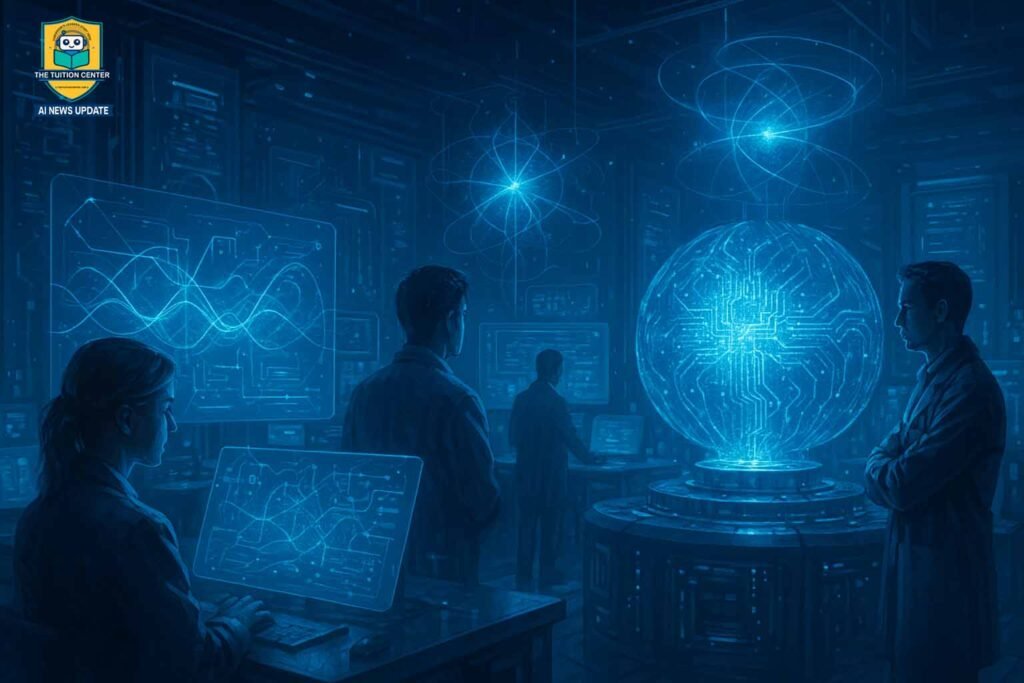
Biometric Emotion AI: The Technology That Reads Human Micro-Moods in Just 30 Seconds
A new generation of emotion-aware AI is emerging — capable of decoding facial micro-expressions, pulse shifts, vocal tremors, and eye behavior patterns with astonishing accuracy.
- Emotion-recognition AI is now a $42 billion global industry in 2025.
- New algorithms can detect 152+ micro-emotion states in 30 seconds.
- India, UAE, Japan, and EU nations are drafting regulations for biometric AI.
Introduction
For decades, human emotion was considered something ineffable — too complex, too fragile, too personal for machines. But in 2025, this belief is being shattered. A new wave of biometric emotion AI systems can decode micro-moods with unprecedented accuracy, weaving together subtle cues the human eye often misses.
These systems read more than facial expressions. They interpret the rhythm of your blinking patterns, micro-sweats on your skin, blood-flow changes visible under infrared, tiny variations in tone, breathing consistency, and eye-movement signatures. The output is a psychological insight machine — one that can understand your emotional state in seconds.
The rise of emotion-aware AI is transforming counselling, education, security, human resources, customer service, and even entertainment. Some see it as the next great frontier. Others see it as a dangerous step toward a hyper-monitored society.
Key Developments
1. Emotion AI Detects Micro-Moods at 152 Levels
Researchers from the University of Tokyo and Stanford collaborated on a breakthrough model capable of classifying 152 emotional micro-states — including subtle combinations like “anxious optimism,” “conflicted enthusiasm,” or “masked disappointment.” The system integrates thermal imaging, voice harmonics, and facial micro-expression mapping.
2. 30-Second Emotion Readings for Health Diagnostics
Hospitals in Singapore, Mumbai, Dubai, and Toronto are piloting emotion biometrics for early detection of anxiety disorders, depression indicators, and emotional dysregulation patterns in teens. These screenings take less than half a minute.
3. AI That Reads Students’ Emotions in Real Time
Classrooms in Finland, Karnataka, and Dubai are testing emotion-recognition dashboards that indicate whether students are confused, bored, focused, or stressed during lessons. The teacher receives instant analytics to adjust pacing.
4. Biometric Retail Experiences
Large brands are experimenting with emotion sensors placed near product aisles. Based on micro-reactions, AI can predict what a customer is likely to buy, avoid, or explore.
5. Corporate Use for Training & Wellbeing
Companies are exploring AI-assisted wellness coaching. Employees wear emotion-detecting earbuds that monitor stress, cognitive fatigue, and focus dips during work hours.
Impact on Industries and Society
Healthcare: Emotion AI is becoming an early-warning system for mental health professionals. A 2025 study from Seoul National University revealed that emotion biometrics can identify depressive patterns 4–6 weeks before traditional symptoms appear.
Education: Personalized learning has taken a huge leap. When AI detects confusion or frustration in a child, it automatically adjusts difficulty or provides step-by-step explanations. Classrooms become more empathetic, responsive, and supportive.
Security & Law Enforcement: Several countries are testing emotion AI at airports to identify suspicious stress patterns. This is highly controversial but demonstrates how powerful the tech is becoming.
Human Resources: HR teams are using AI to reduce bias in interviews by detecting truthfulness, enthusiasm, or hesitation. However, the ethics here are heavily debated.
Customer Experience: Emotion-monitored call centers are becoming common. AI can detect frustration even if the customer speaks calmly, enabling supervisors to intervene proactively.
Expert Insights
“Emotion AI is not here to monitor people — it’s here to understand them. The impact on mental health alone will be revolutionary,” says Dr. Marina Ellison, Director of Cognitive Systems Research at MIT.
“The biggest challenge is consent. Emotion is intimate data. Without strong governance, this could become the most misused form of AI,” warns Professor Vijay Nanda of IISc Bengaluru.
“We are entering a world where machines will know your emotional truth even if you choose not to express it,” notes Japanese AI-psychology pioneer Haruto Sakamoto.
India & Global Angle
India is emerging as a global leader in emotion-recognition research. Bengaluru startups are developing wearable devices for emotional monitoring in therapy, while Hyderabad-based firms are creating AI systems for classroom mood analytics.
Globally, Japan, UAE, Finland, Canada, and South Korea are leading large-scale adoption. The EU AI Act includes specific clauses on “biometric categorization and emotional inference,” making Europe the strictest regulatory environment for this technology.
Policy, Research, and Education
The world is moving rapidly to regulate emotion AI. India’s DPDP Act 2023 classifies biometric data as “sensitive,” meaning explicit consent is mandatory. Meanwhile, UNESCO is drafting global protocols on emotion-recognition ethics.
Universities are launching specialized courses in:
- Emotion Engineering
- Affective Computing
- AI Psychology
- Neuro-Computational Interfaces
Such programs are preparing a new generation of emotion-AI specialists that industries will demand over the next decade.
Challenges & Ethical Concerns
This technology is powerful — and potentially dangerous.
1. Privacy Threats: Emotion is arguably the most personal of all biometric data. Misuse could lead to psychological manipulation or surveillance.
2. Consent Issues: Should employees be monitored for stress at work? Should students be emotion-tracked in class?
3. Cultural Bias: Emotions vary by culture. A “neutral expression” in Japan may be seen as “disengaged” in the West.
4. Over-Reliance on AI: Humans must remain the final interpreters, especially in therapy and education.
Future Outlook (3–5 Years)
- Emotion-brain mapping AI that identifies emotional triggers in real time.
- Personal wellness dashboards showing daily emotional patterns.
- Emotion-aware devices integrated into classrooms, hospitals, and home assistants.
Conclusion
Emotion AI is powerful, inevitable, and deeply transformative. It may become the most human-centered AI technology ever created — if governed well. The coming years will define whether this becomes a tool for wellbeing or for control. Students, professionals, educators, policymakers, and therapists must learn how it works, how to use it responsibly, and how to protect themselves from misuse.