
Biometric Emotions: AI That Reads Micro-Moods and Predicts Human Behaviour in 30 Seconds
Emotion-reading AI is shifting from science fiction to real-world applications across healthcare, education, and global workplaces.
- Global Emotion AI market crossed $6.2B in 2024.
- Applications emerging in mental health, classrooms, call centres, and recruitment.
- Researchers warn about privacy and psychological profiling risks.
Introduction
For decades, scientists tried to understand the subtle signals behind human emotion—tiny eye movements, fleeting facial micro-expressions, shifts in heart rate, microscopic changes in skin temperature. Today, AI systems can read these signals in seconds. Emotion AI has become one of the fastest-growing frontiers in artificial intelligence, bridging psychology, neuroscience, biometrics, and computer vision.
From analyzing stress levels of students during exams to detecting burnout in employees, understanding customer frustration, or diagnosing early signs of depression, Emotion AI is rapidly entering daily life. Cameras, sensors, and microphones—combined with multimodal AI models—can interpret emotional states that even humans often miss.
The biggest shift? Machines are no longer just processing data—they’re understanding the human mind.
Key Developments
1. Micro-Expression Detection Breakthroughs
Tiny facial movements lasting less than 1/25th of a second can reveal concealed emotions. AI now detects these patterns with 92–96% accuracy, outperforming untrained humans. This tech is being deployed in therapy, conflict resolution, and customer service training.
2. Eye-Movement Emotion Mapping
Advanced vision models track saccades—rapid eye movements—to infer attention, confusion, lying patterns, and emotional discomfort. Studies show that the eye is one of the strongest indicators of hidden emotion.
3. Voice Stress AI
Emotion AI models can analyze tone, pitch, tremors, micro-pauses, and vocal resonance to detect fatigue, anxiety, depression, and emotional overload. Call centres began adopting it in 2024.
4. Biometrics + AI: Complete Emotional Profile
New systems combine facial cues, eye patterns, pulse rate, fingertip temperature, and breathing rhythm, building a multi-layer emotional profile within seconds.
5. Real-Time Emotion Dashboards
Schools, workplaces, and mental health apps are testing dashboards that display engagement levels, stress spikes, emotional fatigue, and attention patterns in real time.
Impact on Industries and Society
Education
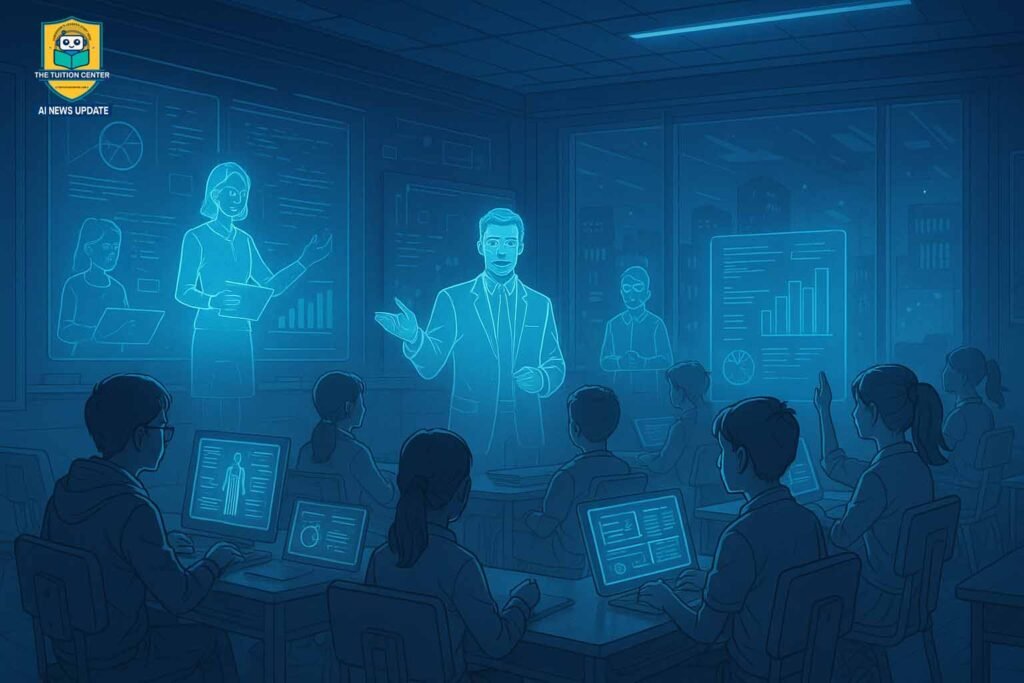
Emotion-aware learning platforms can detect when students lose interest, are confused, or feel anxious. Teachers receive alerts to adjust the pace or approach. This boosts inclusivity—especially for students with learning disorders.
Healthcare & Mental Health
AI tools detect early signs of depression, PTSD, and burnout. Therapists use emotion analytics to understand patient responses beyond verbal communication.
Workplaces
Some companies use Emotion AI to measure employee stress, meeting fatigue, or engagement levels. Productivity tools offer nudges when burnout indicators rise.
Customer Service
AI that detects frustration or confusion can route customers to human agents before escalation.
Security & Law Enforcement
Used cautiously, such systems can assist in lie detection, conflict monitoring, and identifying emotional instability during sensitive operations.
Expert Insights
“Emotion AI will redefine human–machine interaction. But if not regulated carefully, it will also redefine surveillance,” warns Dr. Andrea Williams, Behavioural Neuro-AI Researcher.
“Micro-emotion analytics can help millions dealing with mental health challenges. The key is ethical, human-first deployment,” says Prof. Sunil Verma, IIT Delhi Cognitive Systems Lab.
India & Global Angle
India is emerging as a leader in affordable Emotion AI deployments. Startups in Bengaluru, Pune, and Hyderabad are building multilingual emotion-recognition engines trained on diverse Indian faces, dialects, and expressions—solving a major diversity gap in Western models.
Globally, Japan invests heavily in emotion-aware robots for elderly care. The US focuses on workplace analytics, while Europe is drafting strict AI emotion-detection guidelines under the EU AI Act.
Policy, Research, and Education
The conversation is shifting from “What can emotion AI do?” to “Who controls emotional data, and how is it used?” Governments worldwide are exploring policies to regulate psychological profiling, consent-based data, and emotional biometrics.
Universities are adding new interdisciplinary programs combining AI, psychology, and ethical technology design.
Challenges & Ethical Concerns
- Mass surveillance risks
- Misinterpretation of cultural expressions
- Lack of transparency in data collection
- Emotional manipulation in advertising or politics
- Bias from limited training datasets
Future Outlook (3–5 Years)
- Emotion-aware education systems will become mainstream.
- AI assistants will adjust tone based on user mood.
- Workplaces will adopt emotion dashboards for well-being.
- Home AI devices may forecast mental health dips before they occur.
Conclusion
Emotion AI marks a bold shift from data processing to human understanding. It brings opportunities—more supportive classrooms, better mental healthcare, richer digital interactions. But it also brings ethical expectations: transparency, consent, and dignity. The future of Emotion AI will be shaped not by capability alone, but by how responsibly humanity chooses to use it.