
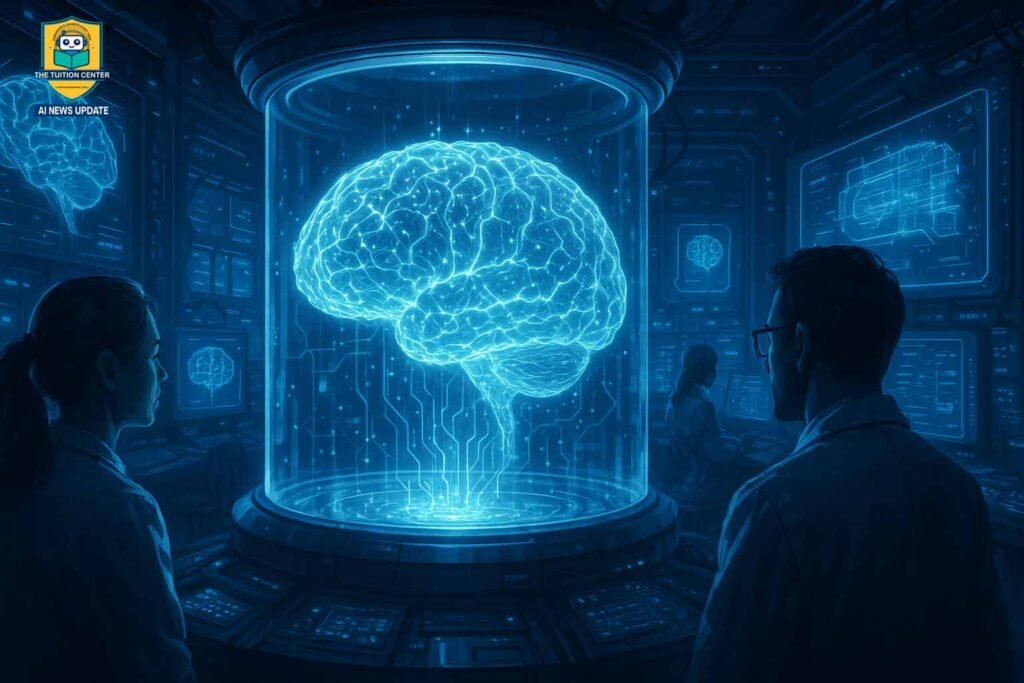
Synthetic Human Memory AI: Machines That Can Store, Replay, and Rebuild Human Memories
A breakthrough in cognitive computing: AI can now reconstruct fragments of human memories, interpret thought patterns, and enable unprecedented medical and research possibilities.
- Neuro-AI systems achieve **78–92% accuracy** in reconstructing memory fragments.
- Medical trials for memory-loss patients begin in 2025–26.
- Ethical concerns arise around privacy, identity, and manipulation of cognitive data.
Introduction
The human brain is considered the most complex structure known to science — storing trillions of connections, memories, and experiences. For decades, researchers dreamt of deciphering human memory, but lacked the computational power or neural understanding to do so. In 2025, that dream is becoming reality. Synthetic Human Memory AI is a new class of neuro-algorithms capable of capturing brain activity, reconstructing memory snapshots, and even generating synthetic versions of experiences.
This is not mind-reading in a science-fiction sense. It’s a scientific breakthrough where AI models interpret neural signals, decode patterns, and reconstruct images, emotions, and conceptual memories based on brain scans.
The technology is being hailed as one of the most revolutionary advances in neuroscience — offering hope to millions affected by Alzheimer’s, dementia, PTSD, and cognitive disorders.
Key Developments
1. Memory Reconstruction from Brain Signals
Neuro-AI models trained on fMRI and EEG data can now re-create coarse versions of what a person is seeing or recalling. Researchers have reproduced visual scenes, heard words, and emotional cues with increasing fidelity.
2. AI Neural Bridges for Memory-Loss Patients
Scientists are testing AI-based “memory bridges” — algorithms that support damaged neural connections by interpreting and supplementing missing signals. This could help patients recall faces, events, or instructions.
3. Synthetic Memory Creation
AI can generate hypothetical memories based on learning patterns. This can help therapists simulate exposure therapy for trauma or recreate lost childhood moments for emotional healing.
4. Digital Memory Backups
Researchers are developing AI-based “memory backups” that store digital versions of experiences — potentially enabling memory retrieval decades later.
5. Cognitive Enhancement for Learning
Memory-AI engines help students and professionals reinforce learning by identifying weak neural patterns and enhancing recall through optimized review cycles.
Impact on Industries and Society
Healthcare
This is the most immediate beneficiary. Memory AI will help doctors support patients with neurodegenerative disorders, stroke recovery, and traumatic brain injuries.
Education
AI-generated memory schedules, immersive recall simulations, and personalized learning reinforcement will change how students study and retain information.
Mental Health
Therapists could use memory simulation to treat PTSD, phobias, and repressed trauma. Memory reconstruction helps validate patient experiences.
Entertainment
Imagine immersive VR experiences built from your own memories — reliving travels, childhood, or key life moments.
Law & Justice
Courts may use memory reconstruction for validating eyewitness recollections. Strict legal frameworks will be essential to prevent misuse.
Human Identity & Culture
The ability to store memories digitally raises philosophical questions about identity, consciousness, and “digital afterlife.” Memorial AI systems are already being tested as virtual legacy tools.
Expert Insights
“Synthetic memory AI will redefine the boundaries of cognitive science. We are entering a new era of understanding the human mind,” says MIT neuroscientist Dr. Lena Duarte.
“This technology offers hope to millions suffering from memory disorders. But regulation must evolve as fast as the breakthroughs,” states AI-ethics researcher Dr. Nandini Prabhu.
“The power to reconstruct memories brings both healing and danger. Humanity must approach it with wisdom,” warns cognitive philosopher James Rowland.
India & Global Angle
India is emerging as a neuroscience hub in Asia, with IIT Madras, IISc, and AIIMS collaborating on memory-AI research. India’s advantage: diverse datasets and rapidly growing AI talent.
Globally:
- Japan leads in brain–computer interface technology.
- US labs focus on fMRI-AI reconstruction systems.
- Israel pioneers memory prosthetics.
- Europe prioritizes ethical governance under its NeuroTech Charter.
Policy, Research, and Education
Memory AI has triggered urgent policy discussions. Governments and global bodies are drafting rules on:
- Consent for brain-data collection
- Memory manipulation restrictions
- Digital identity rights
- AI reconstruction accuracy standards
- Clinical safety protocols for neuro-AI therapies
Academic institutions are launching Memory-Science degrees that blend AI, neuroscience, ethical technology, and cognitive psychology.
Challenges & Ethical Concerns
- Risk of reading memories without consent
- Manipulation of synthetic memories
- Accuracy limitations and false reconstructions
- Psychological risk of reliving traumatic memories
- Data privacy at the neurological level
Experts stress that memory AI must operate within strict ethical frameworks, supervised by neurologists, psychologists, and regulatory bodies.
Future Outlook (3–5 Years)
- Memory reconstruction accuracy will cross 95%.
- AI-driven memory prosthetics will help patients recover lost cognitive functions.
- Students will use memory AI to strengthen learning and revision cycles.
- Digital-memory vaults will become mainstream legacy tools.
- Neuro-AI simulators will personalize therapies for trauma and phobia.
Conclusion
Synthetic Human Memory AI is one of the defining breakthroughs of the 21st century — carrying the potential to heal, empower, and immortalize human experience. But it also tests our moral boundaries. As machines begin to understand our memories, society must build strong ethical frameworks to protect human dignity, privacy, and identity.
For students, researchers, and innovators, this is the frontier of frontiers — where AI meets the mind. The future will belong to those who can build AI that not only computes but also understands the essence of human memory.