
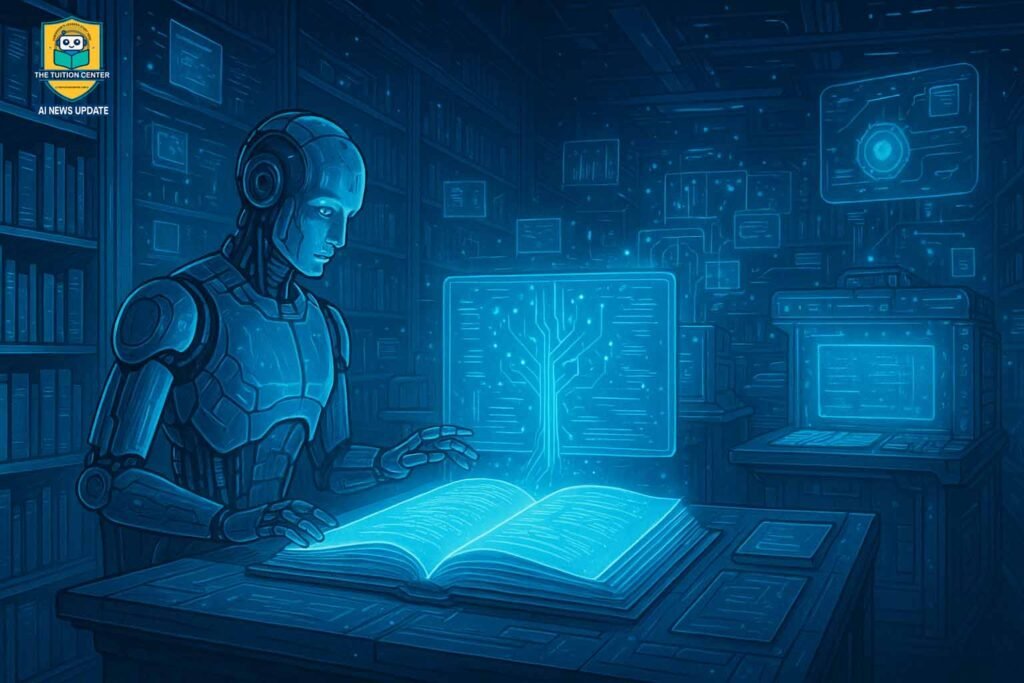
AI-Designed Organic Lifeforms: The New Frontier of Computational Biology in 2025
AI systems are now designing organic cells, tissues, enzymes, and biosystems at unprecedented speed — opening pathways to medical breakthroughs, sustainable agriculture, and life-saving bio-engineering.
Key Takeaway: AI-driven biology engines can now generate, test, and optimize organic lifeforms digitally before they are synthesized in real labs.
- AI reduced biological discovery timelines from years to days in 2025.
- Researchers in India, the US, and Europe are using AI to create climate-resilient crops and new medical therapies.
- Bio-AI platforms can simulate 1 trillion molecular interactions in seconds.
“`
Introduction
Biology is entering a revolution unlike anything witnessed since the discovery of DNA. For decades, scientists experimented in wet labs to test ideas, design molecules, or engineer cells — a process limited by time, cost, and humans’ ability to understand complex biological systems. But 2025 marks the rise of a new scientific paradigm: AI-designed life.
With computational biology models powered by GenAI, quantum simulation, and neural networks trained on centuries of biological data, researchers can now create living systems digitally. These models simulate enzymes, proteins, tissues, and even entire metabolic pathways — and validate outcomes long before experiments reach the lab.
This is not science fiction. These AI-generated bio-systems are already guiding vaccine design, food security, climate resilience, drug discovery, and regenerative medicine. Humanity has entered a new era where life itself can be computed.
Key Developments
1. Digital Cell Factories
AI can now design optimized microbial cells capable of producing vaccines, insulin, enzymes, or biofuels. These “digital twins” of cells allow scientists to reprogram metabolism without trial-and-error experiments. A Bengaluru biotech startup reduced enzyme design time by 96% using such AI cell models.
2. AI-Generated Protein Structures
Following breakthroughs like AlphaFold, 2025 models now predict not only protein structure but full functional behavior — binding sites, reactions, folding stability, and mutation responses. Pharma companies are using this to create next-gen cancer and antiviral therapies.
3. AI-Created Organic Materials
Bio-engineers are designing organic materials used in biodegradable plastics, self-healing tissue scaffolds, and eco-friendly construction components. AI simulates stress conditions, chemical reactions, and viability instantly.
4. Climate-Resilient Lifeforms
Scientists in India and Israel are designing crop varieties resistant to extreme heat, salinity, and drought. AI models predict future climate patterns and generate suitable genetic adaptations.
5. AI Neurosystems
Labs in Japan and the US are digitally modeling neural circuits to understand Alzheimer’s, autism, epilepsy, and cognitive decline. These models shorten drug-research cycles dramatically.
Impact on Industries and Society
1. Healthcare Transformation
AI-designed proteins and therapies are helping in:
- Personalized cancer treatment
- Faster vaccine creation
- Regenerative tissue growth
- Age-related disease reversal research
2. Agriculture & Food Security
AI-generated organic varieties help:
- Improve crop yields by 25–40%.
- Reduce pesticide dependency.
- Extend plant survival during extreme conditions.
- Design nutrient-rich superfoods tailored for regions.
3. Climate & Sustainability
AI-designed microbes help clean oil spills, absorb carbon, break down plastic, and restore damaged ecosystems. Countries like Denmark and Singapore are piloting such eco-bio systems at industrial scale.
4. Pharmaceuticals & Bio-Manufacturing
AI platforms now automate:
- Molecule discovery
- Clinical-trial simulations
- Toxicity predictions
- Bio-manufacturing process optimization
Reducing costs by nearly 60%.
Expert Insights
“AI has become the microscope of the 21st century — except it doesn’t just observe biology; it creates it.”
— Dr. Lena Armitage, Oxford Computational Biology Lab
“We can now test 100 million biological hypotheses per hour. This changes everything about medicine.”
— Dr. Rajesh Pillai, IISc Bengaluru Bio-AI Program
India & Global Angle
India is emerging as a major global hub for bio-AI research thanks to:
- ISRO’s bio-satellite programs
- National Bio-Foundry Missions
- IITs and IISc’s computational biology accelerators
- Growing biotech startup ecosystems
Globally, the US, UK, Singapore, Japan, and South Korea are running multi-billion-dollar national programs to design organic life for medicine, agriculture, and sustainability.
Policy, Research, and Education
Governments worldwide are building regulations for:
- AI-designed genome safety
- Ethical lab guidelines
- Bio-data sharing standards
- AI–biologist hybrid degree programs
Universities are launching new interdisciplinary degrees:
AI + Biology, Bioinformatics, Synthetic Life Engineering, Molecular Simulation Science, and GenAI Medicine.
Challenges & Ethical Concerns
With such unprecedented power come complex risks:
- Bioethics around AI creating new lifeforms
- Risks of lab misuse and biological weaponization
- Genetic inequality between nations
- Long-term ecological side effects
- Lack of global regulatory consensus
Future Outlook (3–5 Years)
- AI-designed micro-organisms for personalized medicine.
- Fully automated bio-labs run by digital researchers.
- AI-generated artificial organs for transplants.
- Bio-computers using organic neurons instead of silicon.
- Global bio-AI safety treaties to prevent misuse.
Conclusion
Humanity is standing at a new evolutionary threshold. For the first time, we can design life with precision, logic, and creativity — guided by AI systems capable of processing biological complexity far beyond human cognition.
The breakthroughs ahead may cure diseases, rebuild ecosystems, and redefine healthcare — but they also demand responsibility, transparency, and global safeguards. The next decade will determine whether AI-designed biology becomes humanity’s greatest scientific triumph or its most difficult ethical test.