
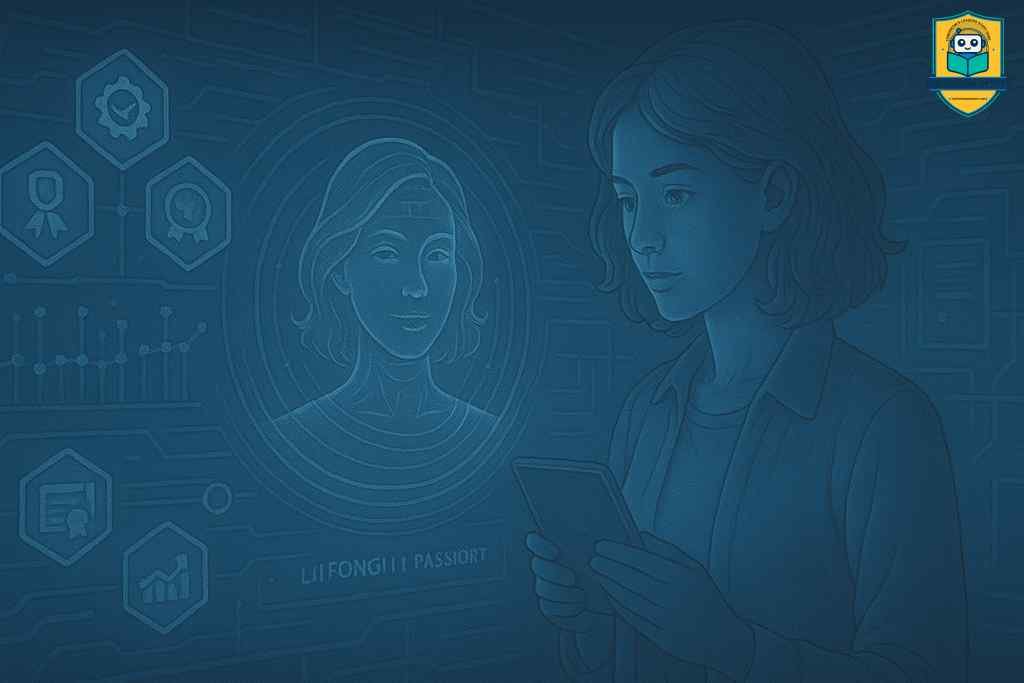
AI Launches the World’s First National Learning Twin: A Breakthrough in Education Governance and Future Workforce Planning
A new AI-powered National Learning Twin unveiled this week digitally mirrors a country’s entire education system, enabling real-time policy decisions, skill forecasting, and personalized student interventions.
- Built from 27 years of education data, 1.2 billion learning events, and real-time AI analytics.
- Used by national ministries for planning budgets, forecasting skill shortages, and monitoring student well-being.
- Transforms the future of governance with precision, personalization, and data-driven action.
Introduction
In the most transformative education announcement of 2025, the world this week witnessed the debut of the first-ever **National Learning Twin (NLT)**—an AI-powered digital replica of a country’s complete education ecosystem.
This system, unveiled by a coalition of global EdTech R&D labs and national ministries, marks the beginning of a new age in governance, where education decisions are made not by guesswork, theory, or slow data cycles—but by real-time intelligence.
The NLT is more than a dashboard, more than a database, and more than an education portal.
It is a **fully operational digital twin**, continuously updating itself using:
- student learning data
- classroom performance metrics
- infrastructure analytics
- teacher capability maps
- socioeconomic indicators
- skill readiness models
- workforce forecasts
For the first time, an entire nation can visualize how its children are learning, how its teachers are performing, and how future skill demands align with current education strengths.
This is a technological milestone that may reshape global education for decades.
Key Developments
1. A Full-Scale Digital Replica of Education
The NLT functions like a holographic map of the country’s education system. Leaders can zoom into:
- District-level learning variability
- School-level attendance patterns
- Classroom-level performance trends
- Student-level cognitive behavior
Unlike traditional national surveys, which take 2–3 years to complete, the NLT updates **every 45 minutes**.
2. National Skill Readiness Forecasts
The platform runs large-scale simulations predicting:
- which skills the nation will need in 2030
- which regions are ahead or lagging
- teacher shortages in key sectors
- the economic impact of skill gaps
Early NLT simulations show shortages in cybersecurity, robotics maintenance, AI ethics expertise, health tech technicians, and climate-science educators across multiple countries.
3. AI Predicts Student Dropouts Before They Occur
One of the most groundbreaking features is the **Early Warning Student Model (EWSM)**.
Using attendance signals, learning velocity, behavioral data, and socio-emotional markers, the AI can identify:
- students at risk of dropping out
- students likely to struggle in STEM
- students showing early burnout
- students who need emotional support
These alerts are delivered to teachers, parents, and school counselors — enabling proactive intervention.
4. AI-Generated National Policy Recommendations
The NLT independently analyzes the entire nation’s data and generates:
- budget recommendations
- teacher recruitment plans
- regional training priorities
- STEM-lab development maps
- digital infrastructure requirements
This allows governments to create high-impact policies with unprecedented accuracy and speed.
Impact on Industries and Society
1. Schools Become High-Performance Learning Hubs
With NLT insights, schools can:
- redesign teaching strategies
- identify struggling learners instantly
- adopt smart classroom technologies
- optimize teacher workloads
Principals receive live dashboards showing which grades or subjects need attention—no more annual exam shockwaves.
2. Students Gain Personalized Pathways at a National Scale
Beyond school-level personalization, NLT offers nationwide personalization.
Students receive:
- personal learning roadmaps
- AI-generated subject recommendations
- career-path predictions
- micro-skills tailored to future job markets
For the first time, even rural students receive guidance at the same precision level as elite urban institutions.
3. Teachers Become Data-Informed Mentors
Teachers often lack visibility into long-term student performance trends.
With NLT:
- teachers can detect early learning gaps
- improve lesson planning
- receive AI-recommended teaching enhancements
- monitor progress with accuracy
This elevates teaching quality across the nation.
4. Governments Transform Decision-Making
Policy-making becomes data-first, not intuition-first.
Governments can see, in real time:
- which districts are improving
- which schools need urgent help
- which regions require new colleges
- which training programs are failing
Ministries described the NLT as “the GPS of national education planning.”
Expert Insights
“This is the future of education governance. Decisions driven by AI will save entire generations.” — Dr. Moira Grant, UNESCO Learning Futures Division.
“The National Learning Twin is the single biggest leap in education intelligence since the internet.” — Prof. Arvind Sharma, Global Education Research Council.
“Countries now have a crystal-clear view of their future workforce. This will change economic planning forever.” — Elena Fedorova, Skill Strategy Lab, EU.
India & Global Angle
India is at the forefront of this breakthrough.
The NLT pilot — launched across several Indian states — revealed:
- Haryana and Kerala excel in digital learning readiness
- Tamil Nadu leads in foundational literacy
- Karnataka shows fastest STEM learning growth
- Rajasthan sees rapid improvement in rural digital adoption
Globally, early adopters include:
- UAE — smart city integrated learning twin
- Finland — emotional well-being tracking at national scale
- Kenya — rural skill readiness modeling
- Singapore — AI-powered school infrastructure planning
Policy, Research, and Education
The NLT supports a new model of policy called **Precision Education Governance**, which allows:
- localized education strategies
- optimized budgets
- AI-backed teacher development
- career readiness forecasting
- uniform quality benchmarks nationwide
Researchers are using NLT data to explore:
- cognitive growth patterns
- impact of digital learning tools
- regional disparities
- long-term workforce evolution
Challenges & Ethical Concerns
Experts caution that a system this powerful requires airtight safeguards.
Key concerns include:
- Data privacy and citizen rights
- Surveillance risks if mismanaged
- Over-dependence on AI policy decisions
- Fairness for marginalized groups
- Bias in predictive analytics
The NLT team implemented:
- end-to-end encryption
- regional compliance modules
- transparent AI audits
- human validation override for all critical decisions
Future Outlook (3–5 Years)
- National Learning Twins will expand across 40+ countries.
- Education budgets will become fully data-driven.
- AI will manage national-level personalized learning.
- Dropout rates will reduce dramatically due to early detection.
- Workforce predictions will shape national economic strategies.
- Rural regions will benefit from localized, precise interventions.
Conclusion
The launch of the world’s first National Learning Twin represents a turning point for humanity.
For the first time, a country can truly understand its education system — not as scattered reports, but as a living, dynamic organism. A system that breathes, evolves, and responds to the real needs of students, teachers, families, and industries.
When nations adopt AI at this level, the future becomes clear, predictable, and full of possibility. The NLT is not just technology — it is a national superpower for learning, growth, and transformation.