
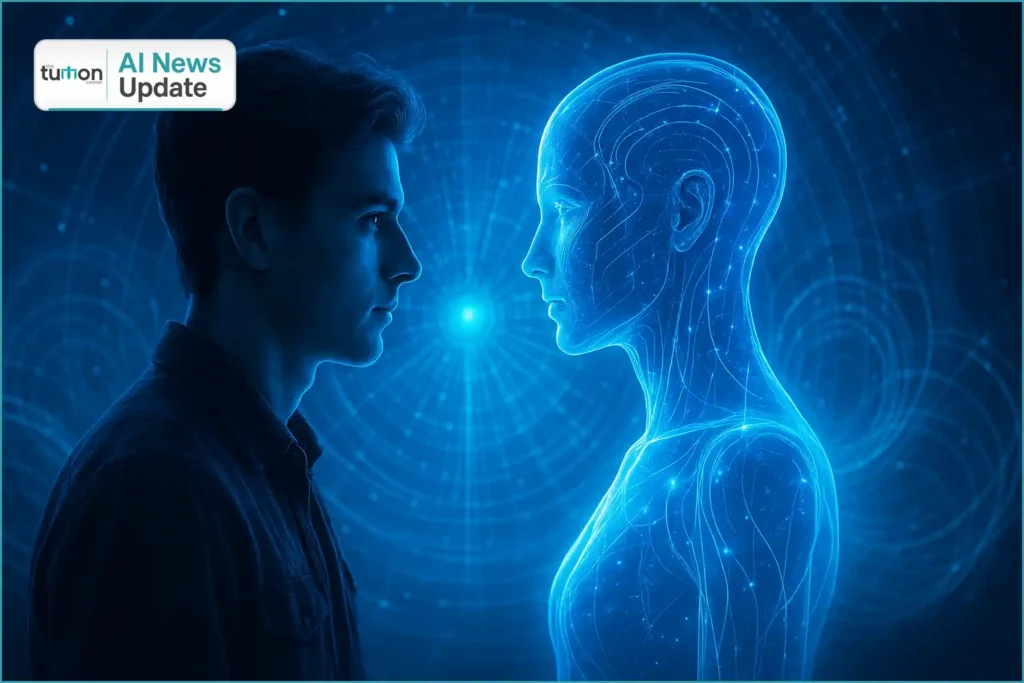
As machines grow more intelligent, humans must decide not whether to compete, but how to coexist — or even coevolve — with the intelligence we’ve created.
Key Takeaway: The age of AI is not about surrendering control — it’s about redefining collaboration. Humanity and AI are not adversaries, but evolutionary partners in the story of intelligence.
- AI now augments thinking, creativity, and ethics rather than replacing them.
- Human adaptability is emerging as our greatest technology.
- The next frontier: emotional intelligence in machines and moral intelligence in humans.
Introduction
Humanity stands at a crossroads. For centuries, we’ve built tools — from fire to electricity — that extended our reach. But artificial intelligence is the first tool that extends our *mind.* This changes everything. It doesn’t just serve us; it learns, predicts, and sometimes surprises us. The question is no longer “Can AI think?” but “How will we think with AI?”
In classrooms, studios, hospitals, and boardrooms, humans are entering a new phase of coexistence with intelligent systems. Yet, as our creations begin to mirror our cognition, we must ask: are we teaching machines to be more human, or are they teaching us to evolve faster?
The New Relationship Between Humans and AI
For much of the 20th century, technology was transactional — we built it, used it, controlled it. AI changes that dynamic. Today, a conversation with ChatGPT, Claude, or Gemini doesn’t feel like issuing commands; it feels like engaging in dialogue. These systems respond, interpret emotion, and even adapt to your style of thinking. This signals a deeper truth: **intelligence is now collaborative.**
Humans bring context, creativity, and conscience. AI brings speed, scale, and synthesis. Together, they create something new — a hybrid intelligence where logic meets empathy, and data meets dreams.
Education: The Human-AI Classroom
Education has become the frontline of coexistence. In the AI-powered classroom, students no longer memorize; they simulate. Teachers no longer lecture; they mentor. AI tutors provide personalized learning, but the teacher remains the compass — ensuring that learning serves wisdom, not just grades.
Imagine a student in 2030 using an AI companion that knows her strengths, weaknesses, and emotional state. It helps her understand physics through storytelling and ethics through roleplay. That’s not replacement — that’s amplification. The teacher’s empathy gives meaning to the machine’s precision. Together, they create a learning ecosystem that reflects both intelligence and compassion.
Work: Redefining Human Value
In business, the conversation has shifted from automation to augmentation. AI handles repetitive analysis, freeing humans for strategy, empathy, and imagination. Studies show that hybrid teams — humans plus AI — outperform either alone. The lesson? The most valuable employees of the future won’t be the ones who know the most, but the ones who know how to learn with machines.
The future workplace will thrive on symbiosis: AI suggesting insights, humans asking deeper questions. AI analyzing trends, humans making moral decisions. The companies that succeed will not be those that replace humans but those that **elevate** them.
AI and Emotion: The Quest for Empathy
As AI grows more advanced, the next frontier isn’t cognition — it’s compassion. Emotional AI is now able to read facial expressions, analyze tone, and respond to human emotion. But empathy cannot be coded; it must be cultivated. This is where humanity’s greatest strength lies: our ability to feel, to care, to connect.
AI might learn the language of emotion, but humans live it. The coexistence model works only if we teach machines empathy while preserving our own. It’s not about making AI human; it’s about making humanity more humane in a technological world.
Ethics: The Soul of Coexistence
Ethical AI isn’t a feature — it’s a foundation. Without moral reasoning, intelligence becomes chaos. The challenge is to embed human values in systems that learn from data, not conscience. As Fei-Fei Li often says, “AI mirrors the soul of its creator.” That means every student, coder, or entrepreneur shaping AI today carries immense responsibility.
AI ethics isn’t only about privacy or bias. It’s about purpose. Why build this system? Who benefits? Who might be harmed? The more intelligent our machines become, the more intentional we must be with our design choices. Coexistence demands awareness, humility, and wisdom — qualities no algorithm can replace.
Expert Insights
“AI will not destroy humanity — indifference might. The danger isn’t machines taking over, it’s humans stepping back.” — Yuval Noah Harari
“Our relationship with AI will define the next stage of evolution. It’s less about control, more about co-creation.” — Demis Hassabis, CEO of DeepMind
“The smartest technologies are not the ones that replace us, but the ones that help us become better versions of ourselves.” — Fei-Fei Li
The Coevolution Hypothesis
Some researchers now argue that humanity and AI aren’t just coexisting — they’re **coevolving**. Each iteration of AI forces society to re-examine its identity. When machines learned to paint, we redefined art. When they learned to write, we redefined creativity. Now, as they begin to reason and empathize, we’re redefining humanity itself.
In this sense, AI acts as both a mirror and a catalyst. It reflects our values while accelerating our evolution. The real question is: will we evolve ethically, emotionally, and collectively fast enough to keep up with our creations?
Education, Policy, and Purpose
To ensure healthy coexistence, education systems must integrate *AI ethics, philosophy, and critical thinking* into every level of learning. Governments must establish frameworks for accountability and transparency without stifling innovation. And industries must adopt “human-in-loop” standards ensuring oversight, fairness, and inclusion.
But beyond policy, what’s needed is purpose. AI should not only optimize profits but also advance wisdom, sustainability, and compassion. The most powerful technologies must serve the weakest hands — that is the test of human progress.
Challenges Ahead
Coexistence is not without conflict. As AI blurs lines of authorship, identity, and autonomy, society must redefine what it means to create, to decide, and to be accountable. The fear of losing control is real — but history reminds us: every great invention began with fear. What mattered was how we grew through it.
The danger lies not in AI’s intelligence, but in humanity’s complacency. The tools we create will always reflect the intentions we design them with. Coevolution demands conscious evolution — not just smarter machines, but wiser humans.
Future Outlook (3–5 Years)
- Rise of Hybrid Intelligence: Human-AI partnerships become the default in education, business, and creativity.
- Emotional Literacy in AI: New models capable of understanding empathy and cultural context shape global communication.
- Human-Centered Policy: Governments focus on well-being indices alongside innovation metrics to ensure ethical growth.
Conclusion
AI and humanity are not on parallel paths — they are entwined in a shared evolution of intelligence. The machines we build today will become mirrors of our collective soul. If we infuse them with empathy, wisdom, and curiosity, they will amplify our highest potential. If we neglect these, they will magnify our flaws. The choice — and the future — remains human.