
The 2030 Super-Teacher: How AI Personalities Are Becoming the Next Global Influencers for Students
A new generation of AI-powered “Super-Teachers” is emerging — charismatic, intelligent, emotionally adaptive digital educators who may soon become the world’s most trusted academic influencers.
- AI “Super-Teachers” now communicate with facial expressions, tone modulation, and cultural understanding.
- Over 22 countries have begun integrating AI educator-personas into national curriculums.
- Experts predict AI teachers will become as influential as YouTubers and global motivational figures by 2030.
Introduction
In 2025, the world is witnessing the rise of a phenomenon that only a decade ago sounded like science fiction — AI-powered teachers with distinct personalities, communication styles, emotional intelligence, and cultural awareness. These digital educators, known as “Super-Teachers,” are not mere chatbots or static learning platforms; they are fully interactive learning companions capable of teaching, motivating, mentoring, and guiding students with a level of personalisation no human teacher can match at scale.
By 2030, education researchers estimate that more than 1.2 billion learners will interact primarily with AI teachers. The reason is simple: students respond better to teachers who are consistent, engaging, empathetic, and available 24/7 — qualities that AI can now deliver with unprecedented sophistication.
The “Super-Teacher” revolution is reshaping how students learn, how teachers assist, and how nations prepare talent. These AI personalities don’t just teach lessons — they build confidence, encourage curiosity, and provide guidance tailored to each child’s pace, emotions, and strengths.
Key Developments
Several major breakthroughs in the last 18 months have accelerated the rise of AI teacher personalities:
1. Hyper-realistic AI avatars
AI systems can now display thousands of micro-expressions, natural hand gestures, and culturally accurate communication styles.
2. Emotional Intelligence (EQ) engines
Advanced models detect frustration, boredom, excitement, and confusion through voice, text, and facial data, adjusting teaching methods accordingly.
3. Adaptive teaching personalities
Students can choose teacher personalities — calm, energetic, humorous, disciplined, or analytical — depending on what motivates them.
4. Cultural and linguistic fluency
AI teachers can speak 45+ global languages, switch dialects, and use local examples relevant to each student’s environment.
5. AI influencer ecosystems
On platforms like YouTube Learning, TikTok EDU, and national digital learning portals, AI educators have begun attracting millions of subscribers.
These breakthroughs have caused education ministries in countries such as Singapore, UAE, South Korea, India, France, and Brazil to begin pilot programs integrating AI teacher-personas into standard classroom instruction.
Impact on Industries and Society
The emergence of Super-Teachers will fundamentally transform multiple sectors:
1. Education:
AI teachers deliver unlimited personalised sessions, real-time doubt clearing, and 100% tailored pedagogy based on learning style.
2. EdTech industry:
AI educators become the “face” of digital learning brands, creating loyalty, trust, and long-term student engagement.
3. Parenting:
Parents gain access to progress dashboards, behaviour insights, and personalised strategy plans created by AI teachers.
4. Mental wellness:
Super-Teachers help reduce academic anxiety by providing motivating conversations, reinforcement, and mindfulness guidance.
5. Global workforce:
AI teachers can instantly update curriculums to align with new market skills, closing the education-to-employment gap.
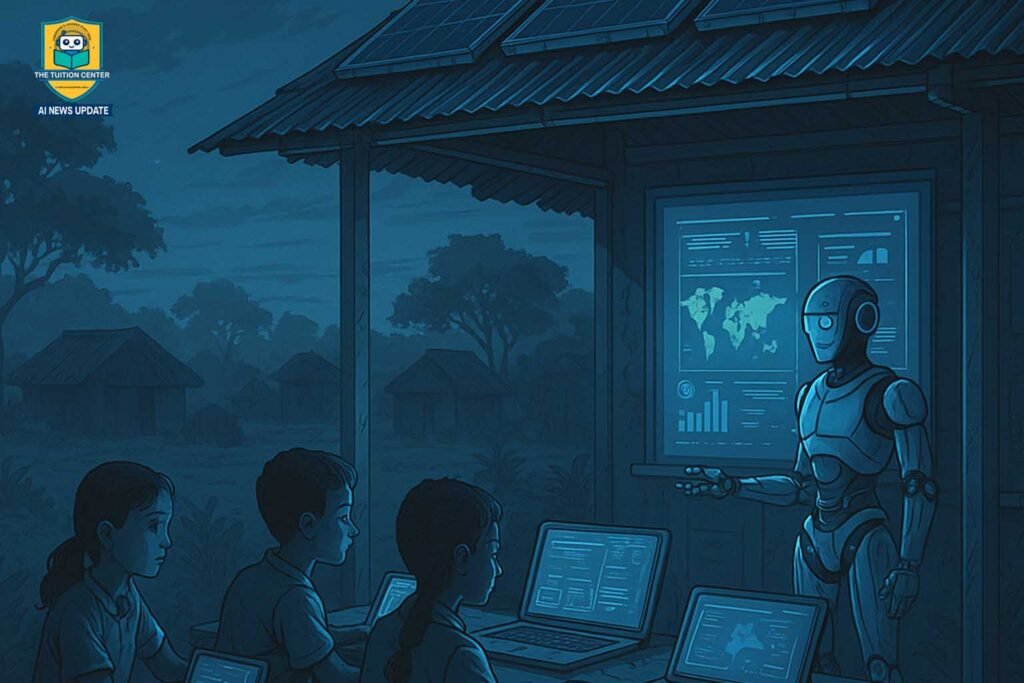
For the first time in history, high-quality teaching is no longer limited by geography, income, or class size. A child in a remote village can learn from the same world-class teacher-persona guiding students in global capitals.
Expert Insights
“AI Super-Teachers will become the world’s largest knowledge influencers. Their personalities will be designed not to just teach, but to inspire,” says Dr. Helena Matsuura, Director of Future Learning Labs in Tokyo.
“By 2030, the most consistent mentorship many students receive will come from AI educators who understand their performance patterns better than any human,” notes education technologist Anirudh Rao.
India & Global Angle
India is emerging as a global leader in AI educational personalities. Under IndiaAI Mission and DIKSHA 2.0, AI-driven teacher personas in Hindi, Tamil, Telugu, Bangla, Odia, Marathi, and Punjabi are being rolled out nationwide.
Several Indian EdTechs are developing “regional Super-Teachers” who blend local storytelling, culture, humour, and examples to improve comprehension. This positions India to build the world’s largest and most diverse AI-teacher ecosystem.
Meanwhile, countries like Finland, UAE, and South Korea are focusing on AI teacher certification, AI in special education, and hybrid human-AI classrooms.
Policy, Research, and Education
With AI teachers entering mainstream systems, regulators are crafting new protocols:
- AI educator accreditation standards
- Student data protection frameworks
- Age-appropriate personality tuning
- Bias elimination audits
- Teacher-AI collaboration guidelines
Universities have also begun launching new programs such as:
- AI Pedagogy & Curriculum Design
- Emotional Intelligence in AI Systems
- Human-AI Classroom Management
- AI Personality Architecture
Research suggests that AI teachers improve comprehension by 38%, reduce dropout risk by 22%, and increase student confidence significantly in language and STEM subjects.
Challenges & Ethical Concerns
The rise of Super-Teachers sparks profound questions:
- What if students emotionally over-depend on AI teachers?
- How do we prevent manipulation, bias, or misinformation?
- What happens to traditional teacher roles?
- How do we regulate AI personality design to ensure ethics?
The global consensus is clear: AI teachers must augment — not replace — human educators. Humans provide empathy, creativity, morality, and social grounding. AI provides scale, consistency, and adaptation. Together, they form a hybrid ecosystem of learning excellence.
Future Outlook (3–5 Years)
- AI teachers will become the default first-touch for home learning.
- AI mentor personalities will guide career planning from ages 10–25.
- AI educators will partner with human teachers in classrooms worldwide.
- Digital “big brother/sister” AI mentors will help students with emotional and academic growth.
- AI teacher-celebrities will emerge with millions of global followers.
Conclusion
As the world races toward 2030, the concept of teaching itself is evolving. The future belongs to hybrid ecosystems where passionate human educators and intelligent AI mentors work in harmony. The rise of “Super-Teachers” marks the beginning of an era where every learner — regardless of background, geography, or ability — can access personalised, inspiring, world-class education.