
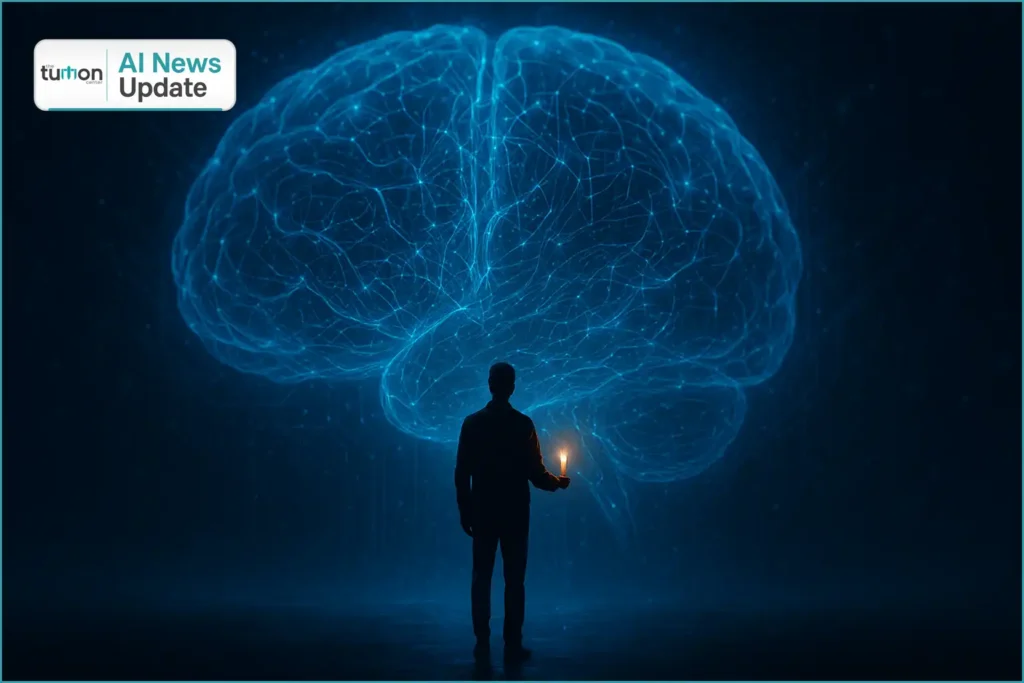
As artificial intelligence advances at break-neck speed, the real question isn’t what machines can do — but what we choose to become.
- AI is increasingly embedded in society’s core systems — healthcare, justice, education, governance.
- Studies warn of loss of human decision-making, increased dependency and ethical risk as AI penetrates daily life.
- Experts stress that the choices we make today around AI will define the humanity of tomorrow.
Introduction
At this moment in time, the discussion about artificial intelligence (AI) is shifting. Gone are the days when AI was mostly a technical curiosity or a sci-fi conceit. It’s now woven into the fabric of our societies — from student-assessment systems to autonomous vehicles, from healthcare diagnostics to content moderation. The question is no longer merely “what can AI do?” but “what does AI mean for us as humans?”
That framing — human-centred, reflective and ethical — is essential. Because while AI may promise efficiency, scale, and automation, it also challenges our understanding of agency, creativity, decision-making and value. In education, for instance, we must not only teach how to use AI, but how to *live* with AI, how to shape it, and how to preserve our humanity in the process.
Key Developments
Here are some of the major strands shaping the ‘AI & humanity’ conversation today.
AI as embedded social infrastructure
Research shows AI’s transformative potential spans healthcare, education, environment, justice and more. A recent comprehensive study describes how artificial intelligence “is reshaping humanity’s future” by altering how we live, learn and decide. As these systems evolve, society increasingly depends on them for decisions, actions and predictions.
Human agency and decision-making under pressure
One recent study explored the downside: in contexts such as education, AI usage can lead to what the authors call “loss of human decision-making power” and “increased laziness” because automation substitutes for active human choice.The result? While efficiency rises, responsibility falls, and critical thinking atrophies.
Societal perception: hope, worry, ambivalence
A 2025 study of American public attitudes found that people were open to AI’s promise, but deeply concerned about its impact on creativity, relationships and social values.The sentiment is ambivalent: excitement for new tools, worry about erosion of control.
Urgency of human-first frameworks
The World Economic Forum (WEF) and others argue that the decisions made *now* will determine the character of AI for the next decades. “Human-first AI” must not be optional, they say — it must be by design.
Impact on Industries and Society
Let’s delve deeper into how this interplay between AI and humanity unfolds across domains.
Education & Learning
In classrooms, AI promises personalised feedback, adaptive assessments and immersive experiences. But this also invites crucial questions: Are students becoming passive recipients as AI adapts to them? Are we losing opportunities to teach agency, inquiry and self-driven learning? The study on AI in education highlighted this risk explicitly.
At an institution like TheTuitionCenter.com, these matters become practical. If you use AI tools to teach AI itself, the curriculum must include *how to ask ethical questions*, not just *how to operate systems*. The value of being human — inquisitive, reflective, creative — must remain central.
Work, Jobs & Meaning
In the labour market, AI is changing the game. Repetitive, predictable tasks may vanish, while roles requiring judgment, empathy and creativity become premium. According to analyst Bernard Marr, AI will “definitely cause our workforce to evolve… The real challenge is for humans to find their passion with new responsibilities that require their uniquely human abilities.” In other words: the question isn’t simply job loss, but job **transformation**.
Governance, Justice & Power Structures
AI’s use in justice systems, law enforcement, credit scoring and public services prompts us to examine whose values are built in. A review of global AI ethics research argues that depending on the region, AI may “entrench social divides and exacerbate social inequality”. For humanity, this means vigilance: it’s not enough to build AI — we must ask *who* it serves, *whose interests* it reflects.
Expert Insights
“The rapid development of AI systems into humans and non-human agents … makes the incorporation of moral values into these systems … a critical area of scholarly inquiry.”
This underscores that AI isn’t just about better algorithms — it’s about embedding value, ethics and culture. Without that, we risk systems that operate efficiently but not ethically.
“Artificial Intelligence is affecting human thought at multiple levels … the externalisation of mental functions to AI can reduce intellectual engagement and weaken critical thinking.”
Here’s the challenge: If we let AI think *for* us, we may lose the habit of thinking *with* ourselves. Human reflection matters.
India & Global Angle
In India, where digital acceleration is already rapid, the stakes are especially high. With a large youth population, explosion of edtech, and strong ambition in AI research and deployment, we have both an opportunity and a responsibility. On the opportunity side: Indian educators, creators and students can participate not just as consumers of AI, but as designers of culturally-aware, inclusive systems.
On the responsibility side: We must avoid becoming a testing ground for global AI systems that reflect external values unaligned with Indian diversity. And as the global literature warns, lower- and middle-income countries may be more vulnerable to negative social effects of AI. Thus for India, “humanity in AI” means *our humanity*, our cultural values, our languages, our aspirations.
Policy, Research, and Education
Policy-makers must ask: What kind of society do we want AI to help build? The human-first approach emphasised by the WEF is relevant here: building cross-sector dialogues, emphasising ethics in curricula, regulatory frameworks that include agency and value alignment.
Research must go beyond efficiency-metrics and model-size metrics. It must investigate how AI affects human cognition, culture, decision-making and societal values. For example, studies now look at how algorithmic personalisation influences thought patterns. Education must integrate that research back into the classroom: building modules on AI ethics, human-AI collaboration, responsibility, interpretability and creativity.
Challenges & Ethical Concerns
The journey is promising — but strewn with challenges:
- **Bias, power and equity:** AI systems reflect the data and design choices of their creators. If we’re not careful, they replicate inequality and silence marginal voices. :
- **Dependency and cognitive erosion:** If humans outsources thinking and decision-making to AI, we risk losing our skills, judgement and agency.
- **Values misalignment:** If technology advances faster than our values, we may create systems that are technically brilliant but socially insensitive or ethically disconnected.
- **Global imbalance:** The advantages of AI may accrue to those with infrastructure, capital, and talent. Others may face exclusion or marginalisation.
Future Outlook (3–5 Years)
- Education systems will embed “human-AI literacy” as core: students will learn not only tools, but how to question AI, assess its values, collaborate with it.
- AI deployment will be increasingly audited for human-centredness: systems will need value-alignment checks, human-in-loop mechanisms, cultural sensitivity built-in.
- A new social contract for AI will emerge: defining rights, agency, sovereignty of human beings in the age of pervasive intelligence — especially in diverse societies like India.
Conclusion
For students, professionals and educators at TheTuitionCenter.com and beyond, the message is clear: as AI becomes more powerful and pervasive, our responsibility grows. We must not just adopt AI — we must *shape* its role in our lives. We must challenge it, contextualise it, humanise it. Because AI will reflect *who we are*, more than *what we create*. And if we are thoughtful, curious and values-driven, we can steer that reflection toward a future where human dignity, creativity and agency flourish — not shrink.
That framing — human-centred, reflective and ethical — is essential. Because while AI may promise efficiency, scale, and automation, it also challenges our understanding of agency, creativity, decision-making and value. In education, for instance, we must not only teach how to use AI, but how to *live* with AI, how to shape it, and how to preserve our humanity in the process.
Key Developments
Here are some of the major strands shaping the ‘AI & humanity’ conversation today.
AI as embedded social infrastructure
Research shows AI’s transformative potential spans healthcare, education, environment, justice and more. A recent comprehensive study describes how artificial intelligence “is reshaping humanity’s future” by altering how we live, learn and decide. As these systems evolve, society increasingly depends on them for decisions, actions and predictions.
Human agency and decision-making under pressure
One recent study explored the downside: in contexts such as education, AI usage can lead to what the authors call “loss of human decision-making power” and “increased laziness” because automation substitutes for active human choice. The result? While efficiency rises, responsibility falls, and critical thinking atrophies.
Societal perception: hope, worry, ambivalence
A 2025 study of American public attitudes found that people were open to AI’s promise, but deeply concerned about its impact on creativity, relationships and social values.The sentiment is ambivalent: excitement for new tools, worry about erosion of control.
Urgency of human-first frameworks
The World Economic Forum (WEF) and others argue that the decisions made *now* will determine the character of AI for the next decades. “Human-first AI” must not be optional, they say — it must be by design.
Impact on Industries and Society
Let’s delve deeper into how this interplay between AI and humanity unfolds across domains.
Education & Learning
In classrooms, AI promises personalised feedback, adaptive assessments and immersive experiences. But this also invites crucial questions: Are students becoming passive recipients as AI adapts to them? Are we losing opportunities to teach agency, inquiry and self-driven learning? The study on AI in education highlighted this risk explicitly.
At an institution like TheTuitionCenter.com, these matters become practical. If you use AI tools to teach AI itself, the curriculum must include *how to ask ethical questions*, not just *how to operate systems*. The value of being human — inquisitive, reflective, creative — must remain central.
Work, Jobs & Meaning
In the labour market, AI is changing the game. Repetitive, predictable tasks may vanish, while roles requiring judgment, empathy and creativity become premium. According to analyst Bernard Marr, AI will “definitely cause our workforce to evolve… The real challenge is for humans to find their passion with new responsibilities that require their uniquely human abilities.” In other words: the question isn’t simply job loss, but job **transformation**.
Governance, Justice & Power Structures
AI’s use in justice systems, law enforcement, credit scoring and public services prompts us to examine whose values are built in. A review of global AI ethics research argues that depending on the region, AI may “entrench social divides and exacerbate social inequality”. For humanity, this means vigilance: it’s not enough to build AI — we must ask *who* it serves, *whose interests* it reflects.
Expert Insights
“The rapid development of AI systems into humans and non-human agents … makes the incorporation of moral values into these systems … a critical area of scholarly inquiry.”
This underscores that AI isn’t just about better algorithms — it’s about embedding value, ethics and culture. Without that, we risk systems that operate efficiently but not ethically.
“Artificial Intelligence is affecting human thought at multiple levels … the externalisation of mental functions to AI can reduce intellectual engagement and weaken critical thinking.”
Here’s the challenge: If we let AI think *for* us, we may lose the habit of thinking *with* ourselves. Human reflection matters.
India & Global Angle
In India, where digital acceleration is already rapid, the stakes are especially high. With a large youth population, explosion of edtech, and strong ambition in AI research and deployment, we have both an opportunity and a responsibility. On the opportunity side: Indian educators, creators and students can participate not just as consumers of AI, but as designers of culturally-aware, inclusive systems.
On the responsibility side: We must avoid becoming a testing ground for global AI systems that reflect external values unaligned with Indian diversity. And as the global literature warns, lower- and middle-income countries may be more vulnerable to negative social effects of AI. Thus for India, “humanity in AI” means *our humanity*, our cultural values, our languages, our aspirations.
Policy, Research, and Education
Policy-makers must ask: What kind of society do we want AI to help build? The human-first approach emphasised by the WEF is relevant here: building cross-sector dialogues, emphasising ethics in curricula, regulatory frameworks that include agency and value alignment.
Research must go beyond efficiency-metrics and model-size metrics. It must investigate how AI affects human cognition, culture, decision-making and societal values. For example, studies now look at how algorithmic personalisation influences thought patterns. Education must integrate that research back into the classroom: building modules on AI ethics, human-AI collaboration, responsibility, interpretability and creativity.
Challenges & Ethical Concerns
The journey is promising — but strewn with challenges:
- **Bias, power and equity:** AI systems reflect the data and design choices of their creators. If we’re not careful, they replicate inequality and silence marginal voices.
- **Dependency and cognitive erosion:** If humans outsources thinking and decision-making to AI, we risk losing our skills, judgement and agency.
- **Values misalignment:** If technology advances faster than our values, we may create systems that are technically brilliant but socially insensitive or ethically disconnected.
- **Global imbalance:** The advantages of AI may accrue to those with infrastructure, capital, and talent. Others may face exclusion or marginalisation.
Future Outlook (3–5 Years)
- Education systems will embed “human-AI literacy” as core: students will learn not only tools, but how to question AI, assess its values, collaborate with it.
- AI deployment will be increasingly audited for human-centredness: systems will need value-alignment checks, human-in-loop mechanisms, cultural sensitivity built-in.
- A new social contract for AI will emerge: defining rights, agency, sovereignty of human beings in the age of pervasive intelligence — especially in diverse societies like India.
Conclusion
For students, professionals and educators at TheTuitionCenter.com and beyond, the message is clear: as AI becomes more powerful and pervasive, our responsibility grows. We must not just adopt AI — we must *shape* its role in our lives. We must challenge it, contextualise it, humanise it. Because AI will reflect *who we are*, more than *what we create*. And if we are thoughtful, curious and values-driven, we can steer that reflection toward a future where human dignity, creativity and agency flourish — not shrink.
That framing — human-centred, reflective and ethical — is essential. Because while AI may promise efficiency, scale, and automation, it also challenges our understanding of agency, creativity, decision-making and value. In education, for instance, we must not only teach how to use AI, but how to *live* with AI, how to shape it, and how to preserve our humanity in the process.
Key Developments
Here are some of the major strands shaping the ‘AI & humanity’ conversation today.
AI as embedded social infrastructure
Research shows AI’s transformative potential spans healthcare, education, environment, justice and more. A recent comprehensive study describes how artificial intelligence “is reshaping humanity’s future” by altering how we live, learn and decide. As these systems evolve, society increasingly depends on them for decisions, actions and predictions.
Human agency and decision-making under pressure
One recent study explored the downside: in contexts such as education, AI usage can lead to what the authors call “loss of human decision-making power” and “increased laziness” because automation substitutes for active human choice. The result? While efficiency rises, responsibility falls, and critical thinking atrophies.
Societal perception: hope, worry, ambivalence
A 2025 study of American public attitudes found that people were open to AI’s promise, but deeply concerned about its impact on creativity, relationships and social values. The sentiment is ambivalent: excitement for new tools, worry about erosion of control.
Urgency of human-first frameworks
The World Economic Forum (WEF) and others argue that the decisions made *now* will determine the character of AI for the next decades. “Human-first AI” must not be optional, they say — it must be by design.
Impact on Industries and Society
Let’s delve deeper into how this interplay between AI and humanity unfolds across domains.
Education & Learning
In classrooms, AI promises personalised feedback, adaptive assessments and immersive experiences. But this also invites crucial questions: Are students becoming passive recipients as AI adapts to them? Are we losing opportunities to teach agency, inquiry and self-driven learning? The study on AI in education highlighted this risk explicitly.
At an institution like TheTuitionCenter.com, these matters become practical. If you use AI tools to teach AI itself, the curriculum must include *how to ask ethical questions*, not just *how to operate systems*. The value of being human — inquisitive, reflective, creative — must remain central.
Work, Jobs & Meaning
In the labour market, AI is changing the game. Repetitive, predictable tasks may vanish, while roles requiring judgment, empathy and creativity become premium. According to analyst Bernard Marr, AI will “definitely cause our workforce to evolve… The real challenge is for humans to find their passion with new responsibilities that require their uniquely human abilities.” In other words: the question isn’t simply job loss, but job **transformation**.
Governance, Justice & Power Structures
AI’s use in justice systems, law enforcement, credit scoring and public services prompts us to examine whose values are built in. A review of global AI ethics research argues that depending on the region, AI may “entrench social divides and exacerbate social inequality”. For humanity, this means vigilance: it’s not enough to build AI — we must ask *who* it serves, *whose interests* it reflects.
Expert Insights
“The rapid development of AI systems into humans and non-human agents … makes the incorporation of moral values into these systems … a critical area of scholarly inquiry.”
This underscores that AI isn’t just about better algorithms — it’s about embedding value, ethics and culture. Without that, we risk systems that operate efficiently but not ethically.
“Artificial Intelligence is affecting human thought at multiple levels … the externalisation of mental functions to AI can reduce intellectual engagement and weaken critical thinking.”
Here’s the challenge: If we let AI think *for* us, we may lose the habit of thinking *with* ourselves. Human reflection matters.
India & Global Angle
In India, where digital acceleration is already rapid, the stakes are especially high. With a large youth population, explosion of edtech, and strong ambition in AI research and deployment, we have both an opportunity and a responsibility. On the opportunity side: Indian educators, creators and students can participate not just as consumers of AI, but as designers of culturally-aware, inclusive systems.
On the responsibility side: We must avoid becoming a testing ground for global AI systems that reflect external values unaligned with Indian diversity. And as the global literature warns, lower- and middle-income countries may be more vulnerable to negative social effects of AI. Thus for India, “humanity in AI” means *our humanity*, our cultural values, our languages, our aspirations.
Policy, Research, and Education
Policy-makers must ask: What kind of society do we want AI to help build? The human-first approach emphasised by the WEF is relevant here: building cross-sector dialogues, emphasising ethics in curricula, regulatory frameworks that include agency and value alignment.
Research must go beyond efficiency-metrics and model-size metrics. It must investigate how AI affects human cognition, culture, decision-making and societal values. For example, studies now look at how algorithmic personalisation influences thought patterns. Education must integrate that research back into the classroom: building modules on AI ethics, human-AI collaboration, responsibility, interpretability and creativity.
Challenges & Ethical Concerns
The journey is promising — but strewn with challenges:
- **Bias, power and equity:** AI systems reflect the data and design choices of their creators. If we’re not careful, they replicate inequality and silence marginal voices.
- **Dependency and cognitive erosion:** If humans outsources thinking and decision-making to AI, we risk losing our skills, judgement and agency.
- **Values misalignment:** If technology advances faster than our values, we may create systems that are technically brilliant but socially insensitive or ethically disconnected.
- **Global imbalance:** The advantages of AI may accrue to those with infrastructure, capital, and talent. Others may face exclusion or marginalisation.
Future Outlook (3–5 Years)
- Education systems will embed “human-AI literacy” as core: students will learn not only tools, but how to question AI, assess its values, collaborate with it.
- AI deployment will be increasingly audited for human-centredness: systems will need value-alignment checks, human-in-loop mechanisms, cultural sensitivity built-in.
- A new social contract for AI will emerge: defining rights, agency, sovereignty of human beings in the age of pervasive intelligence — especially in diverse societies like India.
Conclusion
For students, professionals and educators at TheTuitionCenter.com and beyond, the message is clear: as AI becomes more powerful and pervasive, our responsibility grows. We must not just adopt AI — we must *shape* its role in our lives. We must challenge it, contextualise it, humanise it. Because AI will reflect *who we are*, more than *what we create*. And if we are thoughtful, curious and values-driven, we can steer that reflection toward a future where human dignity, creativity and agency flourish — not shrink.