
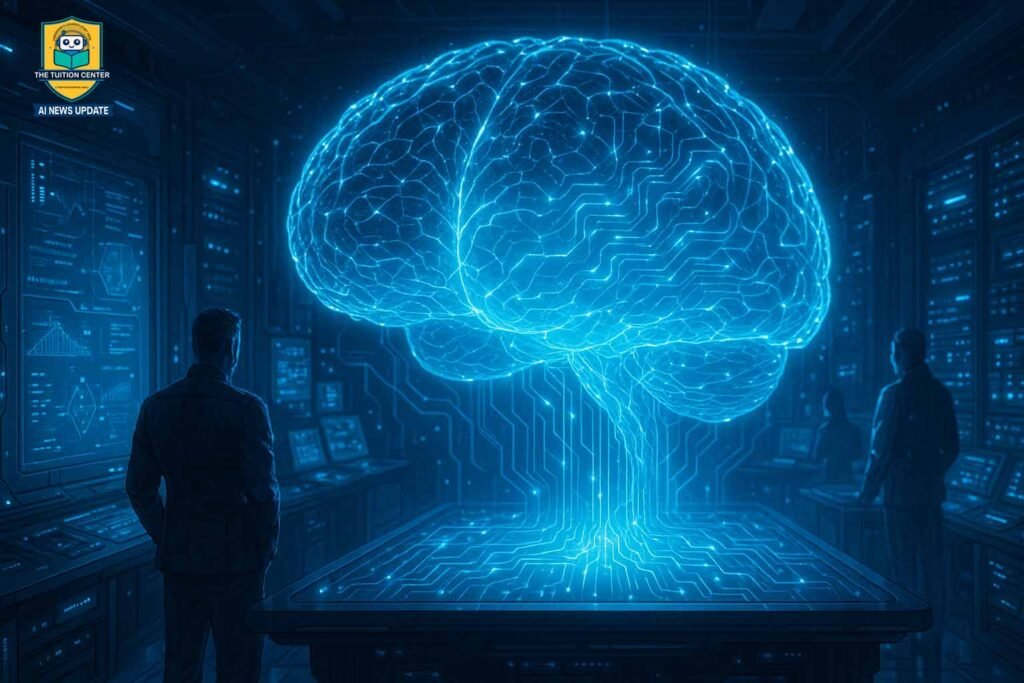
Synthetic Memory AI: Machines Are Now Building, Storing & Recalling Long-Term Human-Like Memories
Artificial intelligence can now form persistent memories — allowing AI systems to learn continuously, recall past interactions, and behave with surprising long-term awareness.
- AI memory systems store emotional tone, behavioural patterns, and long-term user preferences.
- 2025 marks the first commercial release of AI with persistent multi-year memory.
- India, US, South Korea, and Germany lead the research landscape for synthetic cognition.
Introduction
Artificial intelligence has always struggled with a simple but profound limitation — forgetfulness. Traditional AI systems could not remember past interactions beyond a fixed context window. Every conversation or task was treated as a fresh start.
In 2025, that barrier finally broke. Synthetic memory AI emerged as a new paradigm, enabling machines to encode experiences, store long-term memories, and retrieve them with incredible precision. This development is more profound than it may appear — it introduces continuity, personality stability, and long-term reasoning to machines.
The age of persistent intelligence has begun.
Key Developments
1. Human-Like Memory Encoding
AI models now store episodic memories (events), semantic memories (facts), and procedural memories (skills). Systems can recall previous user conversations, preferences, goals, and even emotional patterns.
2. Memory Compression Algorithms
New compression techniques inspired by the hippocampus allow AI to store years of data using minimal computational resources. These memories remain searchable and context-aware.
3. Emotional Memory Mapping
AI can now remember the emotional tone of interactions — recognizing whether a user was stressed, excited, or frustrated during previous sessions.
4. Memory Reinforcement Mechanisms
Just like humans remember through repetition, AI reinforces memories based on relevance. Unused memories fade; important ones strengthen.
5. Multi-Agent Shared Memory
Entire fleets of AI agents now share memory pools, enabling collaborative learning. A lesson learned by one agent becomes instantly accessible to all.
Impact on Industries and Society
Healthcare: Synthetic memory AI assists doctors by remembering long-term patient behaviour, treatment history, and lifestyle patterns.
Education: AI tutors personalize lessons by tracking a student’s progress over years.
Customer Support: AI remembers past issues, product history, and user preferences — making support instant and personalized.
Business Operations: AI project managers remember organizational goals, previous roadblocks, and stakeholder preferences.
Entertainment: AI companions in games and apps develop personalities that evolve over time.
Cybersecurity: AI systems memorize intrusion patterns and adapt defence mechanisms accordingly.
Expert Insights
“Synthetic memory is the missing ingredient of true artificial intelligence. It is what unlocks long-term reasoning and emotional continuity,” says Dr. Aisha Monroe, MIT Cognitive AI Lab.
“AI can now grow with users — learning who they are, what they need, and how to support them over the long term,” notes Dr. Harsh Mehta, IIT Madras AI Research Center.
“This is the foundation for artificial consciousness — not sentience, but persistence,” adds neuroscientist Dr. Elena Vasiliev.
India & Global Angle
India is among the world’s fastest adopters of persistent AI memory technologies. EdTech platforms integrate AI tutors with multi-year memory. Digital governance systems remember citizen preferences for services.
Globally, the US leads in synthetic memory architecture, Japan in robotic memory systems, Germany in industrial memory AI, and South Korea in emotional memory modelling.
Policy, Research, and Education
Governments are building ethical frameworks for memory-based AI due to the sensitivity of stored data.
- India: DPDP-compliant Memory Governance Protocol.
- EU: Synthetic Cognition Regulation.
- US: Memory Transparency Act.
- South Korea: Emotional AI Safety Board.
Academic programs include:
- Synthetic Cognition Engineering
- Memory Systems Architecture
- AI Behaviour Modelling
- Neuro-Symbolic Intelligence
Challenges & Ethical Concerns
1. Privacy: AI memories may contain highly personal details.
2. Consent: Users must control what AI is allowed to remember.
3. Psychological Dependence: Emotional memory AI may create unhealthy reliance.
4. Manipulation Risks: Long-term behavioural tracking could be misused by corporations.
5. Safety: Malicious memory injection attacks are a new cyber threat.
Future Outlook (3–5 Years)
- AI systems with multi-decade memory continuity.
- AI companions functioning like lifelong partners or mentors.
- Organizations run by persistent AI operational memories.
Conclusion
Synthetic memory AI represents a major turning point in the evolution of intelligence. It transforms AI from a transactional tool into a continuous learning partner — capable of long-term understanding, adaptive reasoning, and emotional stability. As this technology matures, the relationship between humans and machines will grow deeper, more meaningful, and more effective. The future belongs to intelligent systems that don’t just compute — they remember.