
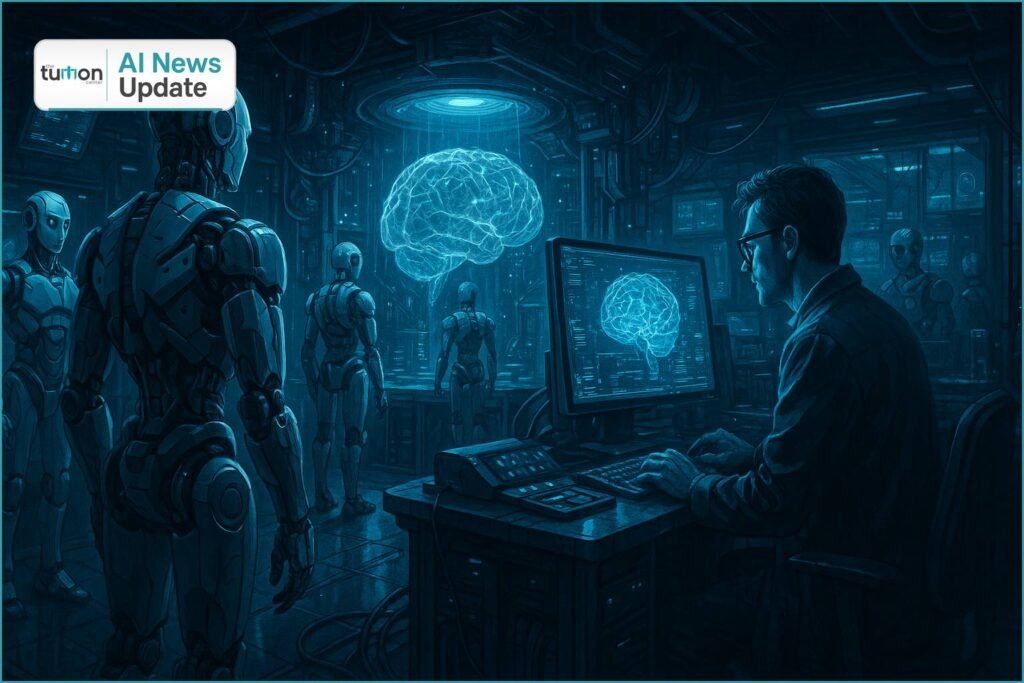
AI is not taking jobs—it’s transforming them. A new generation of workers is emerging, where humans and intelligent systems collaborate seamlessly to innovate, analyze, and create value at unprecedented speed.
- McKinsey projects AI-driven productivity could add $4.4 trillion annually to the global economy by 2030.
- India’s AI workforce has surpassed 1.2 million professionals trained in GenAI applications across IT, finance, and education sectors.
- Hybrid human-AI workflows are now redefining roles across law, healthcare, logistics, and media.
Introduction
“Will AI take our jobs?” has been the defining anxiety of the 2020s. But as we cross into 2025, the narrative has shifted. The world is not seeing a replacement wave—it’s witnessing a realignment. Work is being redefined, not removed. Artificial Intelligence has become an amplifier of human capability—an economic catalyst that enhances precision, productivity, and personalization.
In this new world of “Augmented Work,” humans bring creativity, empathy, and ethical judgment, while AI contributes speed, scale, and analytical power. The outcome: industries reinvented, workflows reborn, and a workforce ready for collaboration over competition.
“`
Key Developments
According to the World Economic Forum’s *Future of Jobs Report 2025*, over 60% of companies have integrated AI automation into at least one key function. Yet, paradoxically, employment in AI-linked sectors has grown faster than anticipated. Roles like “AI workflow designer,” “ethics auditor,” and “automation strategist” didn’t exist five years ago—they now command premium salaries globally.
India stands out as a case study. The country’s Digital India initiative, combined with the skilling programs under NASSCOM and Skill India Mission, has prepared millions for AI-augmented professions. In finance, AI co-pilots assist analysts by parsing millions of market signals daily; in law, legal research copilots draft preliminary briefs, leaving lawyers free for argumentation and client strategy.
Impact on Industries and Society
Corporate Sector: Enterprises are deploying AI copilots for HR, marketing, and logistics. Tools like Microsoft 365 Copilot and OpenAI’s enterprise suite are becoming digital colleagues—joining meetings, summarizing insights, and generating actionable reports. Productivity metrics are rising by 40–70% in organizations that adopt AI-enabled workflows responsibly.
Healthcare: Radiologists, once overwhelmed with image backlogs, now use AI to triage scans, freeing time for patient consultations. Hospitals are hiring “AI Clinical Coordinators” to manage the balance between algorithmic decisions and human oversight.
Media & Entertainment: Journalists are using AI to process data, identify story patterns, and even generate preliminary reports, but the editorial voice remains human. Filmmakers are integrating AI for pre-visualization, script analysis, and post-production, creating faster, leaner studios.
Education: Teachers are no longer fighting AI—they’re co-creating with it. Automated grading, generative lesson design, and individualized feedback are making classrooms more inclusive and efficient.
Expert Insights
“We’re entering the age of AI coworkers. The next great skill isn’t coding—it’s collaboration.” — Andrew Ng, Co-founder, Coursera
“The AI revolution won’t replace people; it will replace processes that refuse to evolve.” — Sundar Pichai, CEO, Google
“AI is best when it makes humans indispensable, not redundant.” — Gita Gopinath, IMF Deputy Managing Director
India & Global Angle
India is one of the top five nations in AI-driven employment generation. NITI Aayog’s “AI for All” mission continues to blend policy with practice—creating scholarships, research hubs, and accelerator programs for AI entrepreneurs. Bengaluru and Hyderabad are emerging as Asia’s twin AI capitals, hosting thousands of startups integrating AI in sectors from logistics to agriculture.
Globally, the U.S., Japan, and Germany are redefining workplace cultures to embrace hybrid human-AI teams. Japan’s “Society 5.0” initiative—a vision for a super-smart society—serves as a blueprint for the balance between innovation and inclusivity. Meanwhile, the European Union’s Digital Labor Code is underlining human rights and data dignity as pillars of the AI economy.
Policy, Research, and Education
Governments and academia are catching up with the velocity of change. Universities like IIM Ahmedabad, MIT, and INSEAD now offer degrees in “AI Leadership” and “Augmented Management.” These programs teach executives to harness AI tools, not fear them. The Indian government’s National AI Resource Hub is collaborating with industries to build AI-ready infrastructure and citizen-accessible datasets.
Corporate learning initiatives, from Infosys Springboard to Accenture’s Synapse AI Academy, have upskilled over 2 million Indian professionals since 2023. Research is shifting focus from automation metrics to human-AI interaction quality—measuring collaboration success, trust indices, and ethical alignment in real workflows.
Challenges & Ethical Concerns
Job Displacement Anxiety: While AI creates new roles, reskilling gaps persist. Workers in manufacturing and clerical sectors face uncertainty without proactive support systems.
Data Ownership & Bias: AI tools often rely on enterprise data, raising questions about employee privacy and workplace surveillance.
Digital Divide: Smaller firms and rural economies risk being left behind without affordable AI access or localized training programs.
Skill Inflation: Demand for AI proficiency may lead to credential inflation—where job requirements outpace practical necessity, excluding capable talent.
Future Outlook (3–5 Years)
- Human-AI Collaboration Protocols: Formalized frameworks defining ethical boundaries and decision responsibilities in hybrid teams.
- AI Apprenticeships: Industry-led programs where AI systems mentor interns—an inversion of traditional teaching hierarchies.
- Algorithmic Transparency Laws: Mandating companies to disclose AI’s role in workplace decisions and evaluations.
- Inclusive Growth: National skilling missions and micro-learning platforms ensuring access to AI literacy for all citizens.
Conclusion
The augmented workforce isn’t a prediction—it’s already here. Every teacher using an AI tutor, every doctor reading an AI scan, every analyst reviewing AI insights is part of this new economy. The future of work is not human versus machine—it’s human plus machine. Success belongs to those who can blend intuition with information, ethics with algorithms, and empathy with efficiency.
As AI reshapes industries, one truth remains: technology may automate tasks, but only humans can create meaning. The next industrial revolution is emotional, creative, and collaborative—and its best workers are not replaced, but reimagined.